

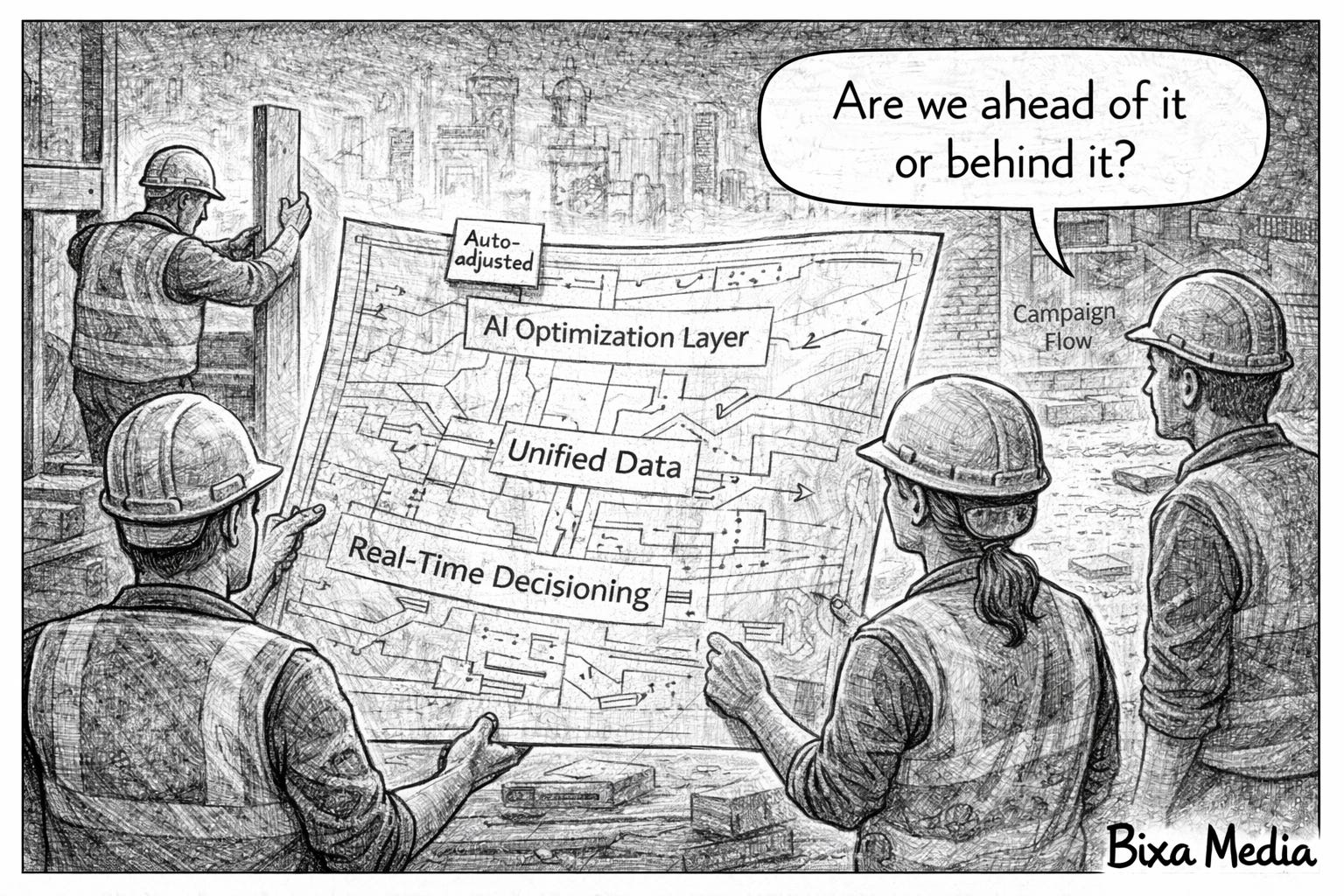
AI capabilities do not wait for organizational readiness. They ship, they integrate, and they start affecting how your tools work whether your team has planned for them or not.
That gap - between what the stack can now do and how most marketing teams actually operate - is the story of 2026 so far. And it is getting harder to ignore.
This issue covers where the cracks are showing up and what to do about them.
🔥 High Impact
Meta Just Rebuilt the Brain Behind Its Ad Platform
What’s Changed
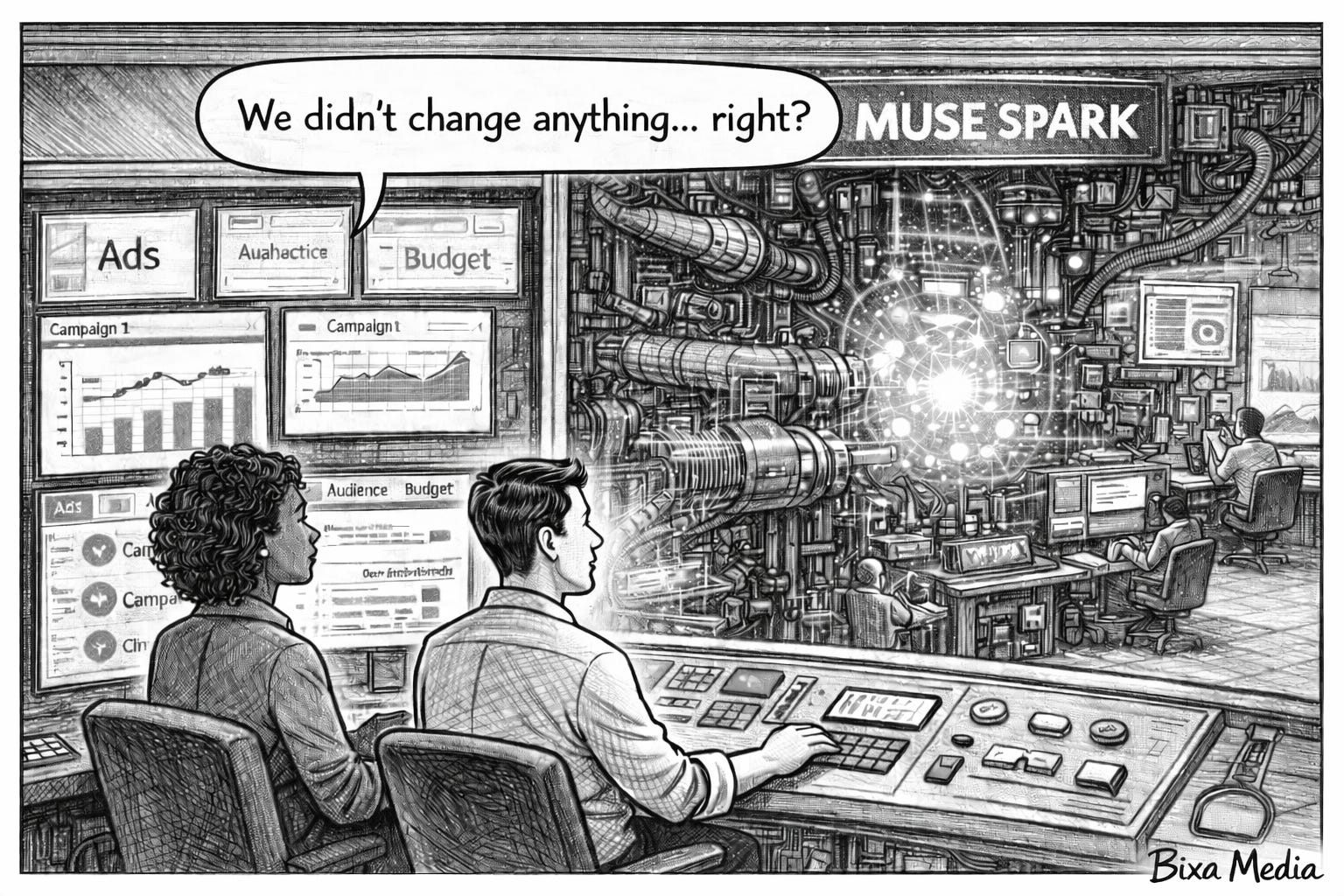
On April 8, Meta launched Muse Spark, the first major model from its newly formed Meta Superintelligence Labs, led by Alexandr Wang, who joined via a $14.3 billion Scale AI acquisition. Built in nine months, Muse Spark is closed-source - a deliberate break from Meta’s open-source Llama tradition - and runs in two modes: Instant for fast responses and Thinking for multi-step reasoning. It is natively multimodal, handling text, image, and audio.
The model is already live inside Meta AI and deploying across WhatsApp, Instagram, Facebook, Messenger, and Ray-Ban smart glasses. That is over three billion monthly active users on a single upgraded intelligence layer. Meta’s stock jumped roughly 6.5% on the announcement.
The business logic is straightforward. Advertising accounts for 98% of Meta’s roughly $200 billion in annual revenue. With $115–135 billion in 2026 capital expenditure, the pressure to show returns is significant. Analysts at Morningstar and Citizens both point to ad targeting, not developer adoption, as the real prize.
Why It Matters
In the last issue, we flagged the frontier model race as something to watch. Muse Spark is the moment that race becomes a marketing operations story.
The benchmarks are not the point. Meta was never going to win on raw capability against OpenAI or Anthropic. What Meta has that no other AI lab comes close to is distribution: three billion people already inside its platforms, already generating behavioral data, already seeing ads. Muse Spark gives Meta a model purpose-built to make that distribution more valuable.
For marketers, the implication is concrete. The targeting logic behind every Meta campaign just changed. The content surfaces where your ads appear are being re-ranked by a new model. The recommendation systems that determine organic reach are running on different intelligence. Most teams have not adjusted how they operate on Meta to account for any of it.
What This Means
Ad targeting on Meta is entering a new optimization regime. Muse Spark was built with advertising as the primary revenue case, not a secondary feature. When the model powering your ad platform is rebuilt from scratch with tighter integration to user behavior across text, image, and audio, the variables that determined performance in 2025 are not guaranteed to hold in 2026.
The creative and content bar on Meta platforms is rising. A more capable model means the platform’s ability to assess content relevance, quality, and engagement signals is improving. Content that worked because it gamed older ranking signals will lose ground to content that genuinely matches user intent and context.
Meta’s closed-source shift has competitive implications. By keeping Muse Spark proprietary, Meta controls how and when its most capable intelligence shows up in its products. Advertisers and marketers have less visibility into how decisions are being made, and less ability to reverse-engineer what works.
What To Do
If you are running Meta campaigns, treat Q2 2026 as a recalibration period. Pull your last 90 days of performance data and look for signals that targeting efficiency or creative performance is shifting. Do not assume that what worked before Muse Spark will hold.
Review your creative strategy against the multimodal reality of where Muse Spark is deployed. Content that appears across Instagram, WhatsApp, and Ray-Ban glasses is being evaluated by the same model across very different contexts. Consistency of message matters more when the intelligence layer is unified.
If your team has not revisited its Meta strategy since the Llama era, that gap is now measurable in performance terms, not just theoretical ones.
Ignore This If
Meta platforms are not part of your media mix and you have no plans to test them.
Sources
TechCrunch - Meta debuts the Muse Spark model in a ground-up overhaul of its AI (April 8, 2026)
Fortune - Meta unveils Muse Spark, Mark Zuckerberg’s AI push (April 8, 2026)
CNBC - Meta’s long-awaited AI model is finally here, but can it make money? (April 9, 2026)
Meta Newsroom - Introducing Muse Spark from Meta Superintelligence Labs (April 8, 2026)
Microsoft Is Building Its Own AI Stack, and It's Already in Your Tools
What’s Changed
On April 2, Microsoft launched three in-house AI models - MAI-Transcribe-1, MAI-Voice-1, and MAI-Image-2 - available immediately through Microsoft Foundry and a new MAI Playground. They were built by Microsoft’s Superintelligence team, formed in October 2025 and led by Mustafa Suleyman, Microsoft AI’s CEO, under an explicit mission he calls “AI self-sufficiency.”
The models cover three commercially significant capabilities. MAI-Transcribe-1 handles speech-to-text across 25 languages at 2.5x the speed of Microsoft’s previous Azure Fast offering, at $0.36 per hour. MAI-Voice-1 generates 60 seconds of natural-sounding audio in one second and can clone a custom voice from just a few seconds of audio input. MAI-Image-2 is Microsoft’s most capable image generation model, already ranking top 3 on the Arena.ai leaderboard, with rollouts underway in Copilot, Bing, and PowerPoint.
These are not models in testing. MAI-Transcribe-1 is already running inside Copilot Voice Mode and Microsoft Teams. MAI-Image-2 is live in Copilot and Bing Image Creator. PowerPoint is next.
In a separate announcement the same week, Microsoft also moved Agent Evaluation in Copilot Studio to general availability, giving enterprise teams automated tools to assess AI agent behavior at scale without manual testing.
Why It Matters
For most of the past two years, Microsoft’s AI story was straightforward: partner with OpenAI, embed Copilot everywhere, let the model layer sit with someone else. That story just changed.
Suleyman was unambiguous in his public comments: Microsoft is building toward complete independence at the model layer across every modality. The MAI launch is the opening move in a multi-year roadmap, not a one-off product release.
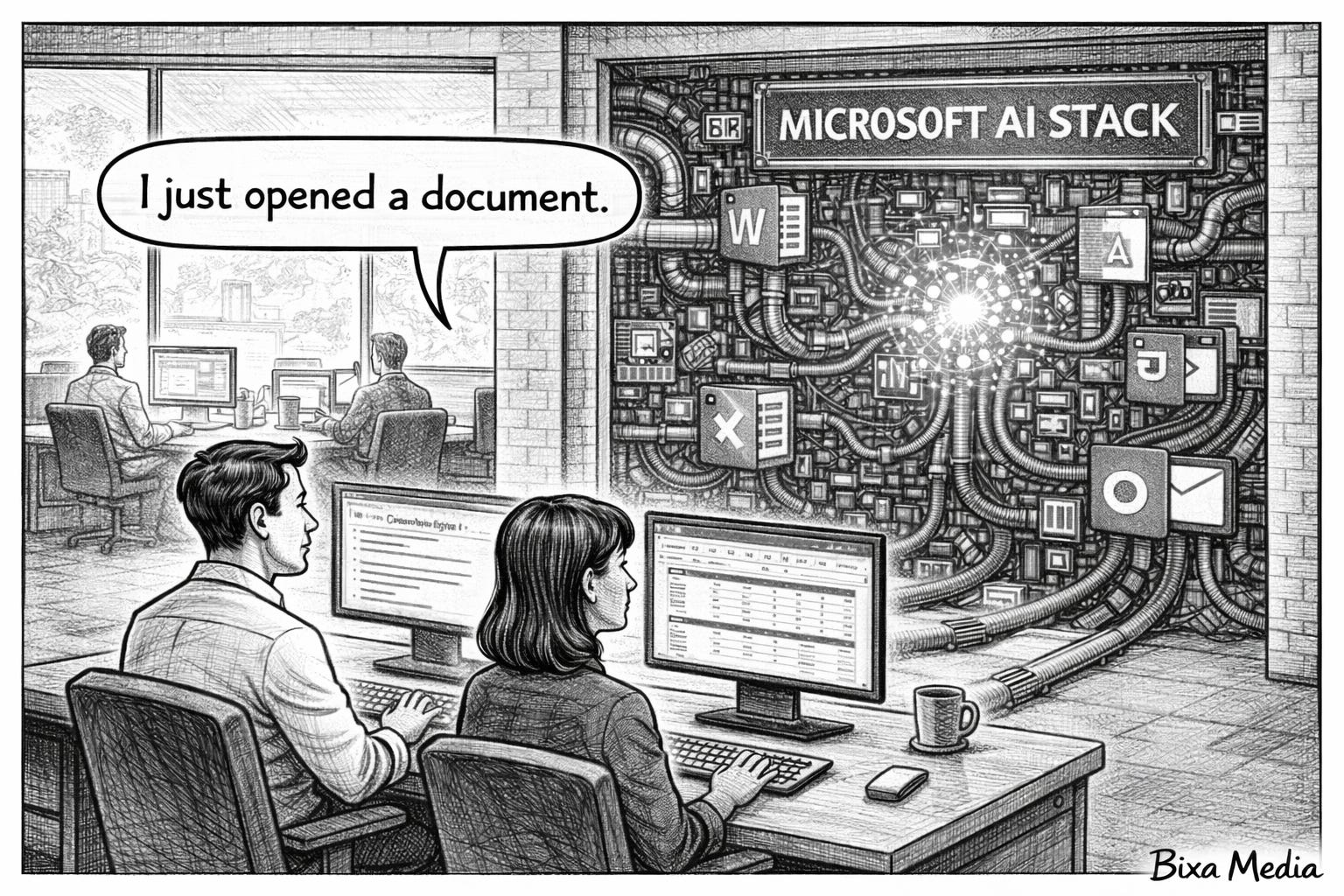
If your team uses Teams for calls, Copilot for drafts, or PowerPoint for presentations, the AI underneath those tools has already been replaced. The question is whether the way you use them has changed at all.
What This Means
The Microsoft productivity stack is being rebuilt on first-party AI. Copilot, Teams, PowerPoint, Bing - each of these products is already running or phasing in MAI models. The AI capabilities your team relies on inside Microsoft’s suite are no longer third-party features; they are first-party infrastructure that Microsoft controls end-to-end.
Custom voice and transcription workflows just got significantly cheaper. MAI-Transcribe-1 at $0.36 per hour undercuts leading alternatives by roughly 50%. MAI-Voice-1’s ability to generate a custom brand voice from seconds of audio removes a production bottleneck that previously required specialized vendors. Teams running these workflows on legacy tooling now have a direct cost and quality comparison to make.
Microsoft’s move signals a broader platform independence trend. Meta rebuilt its ad intelligence in-house. Microsoft is rebuilding its productivity intelligence in-house. The era of large platforms depending on outside AI providers for core features is ending. For marketers, that means the tools you rely on will increasingly reflect their platform owners’ priorities, not a shared model layer.
What To Do
Audit which Microsoft tools your team uses for transcription, voice, and image generation. If you are paying for third-party vendors to handle these workflows inside a Microsoft environment, the calculus on those contracts has changed.
If you use Copilot in Teams or PowerPoint, check what features have updated in the last 30 days. MAI model rollouts are phased and not always announced loudly. The capability upgrade may already be live in your environment.
If you have AI agents running inside Copilot Studio, you previously had to review what they were doing manually, which does not scale once agents handle hundreds of interactions a day. Microsoft just shipped a built-in tool that does that review automatically. For teams that have been hesitant to move agents into live use, this removes one of the last practical blockers.
Ignore This If
Your team does not use Microsoft products and has no plans to evaluate AI transcription, voice, or image generation workflows.
Sources
Microsoft AI - Today we’re announcing 3 new world class MAI models, available in Foundry (April 2, 2026)
VentureBeat - Microsoft launches 3 new AI models in direct shot at OpenAI and Google (April 2, 2026)
TechCrunch - Microsoft takes on AI rivals with three new foundational models (April 2, 2026)
Microsoft Tech Community - Introducing MAI-Transcribe-1, MAI-Voice-1, and MAI-Image-2 in Microsoft Foundry (April 2, 2026)
Redmond Magazine - Microsoft Unveils 3 New MAI Models Aimed at Enterprise Devs (April 2, 2026)
Your Martech Stack Just Changed Its Architecture. Both Salesforce and Adobe Did It on the Same Day.
What’s Changed
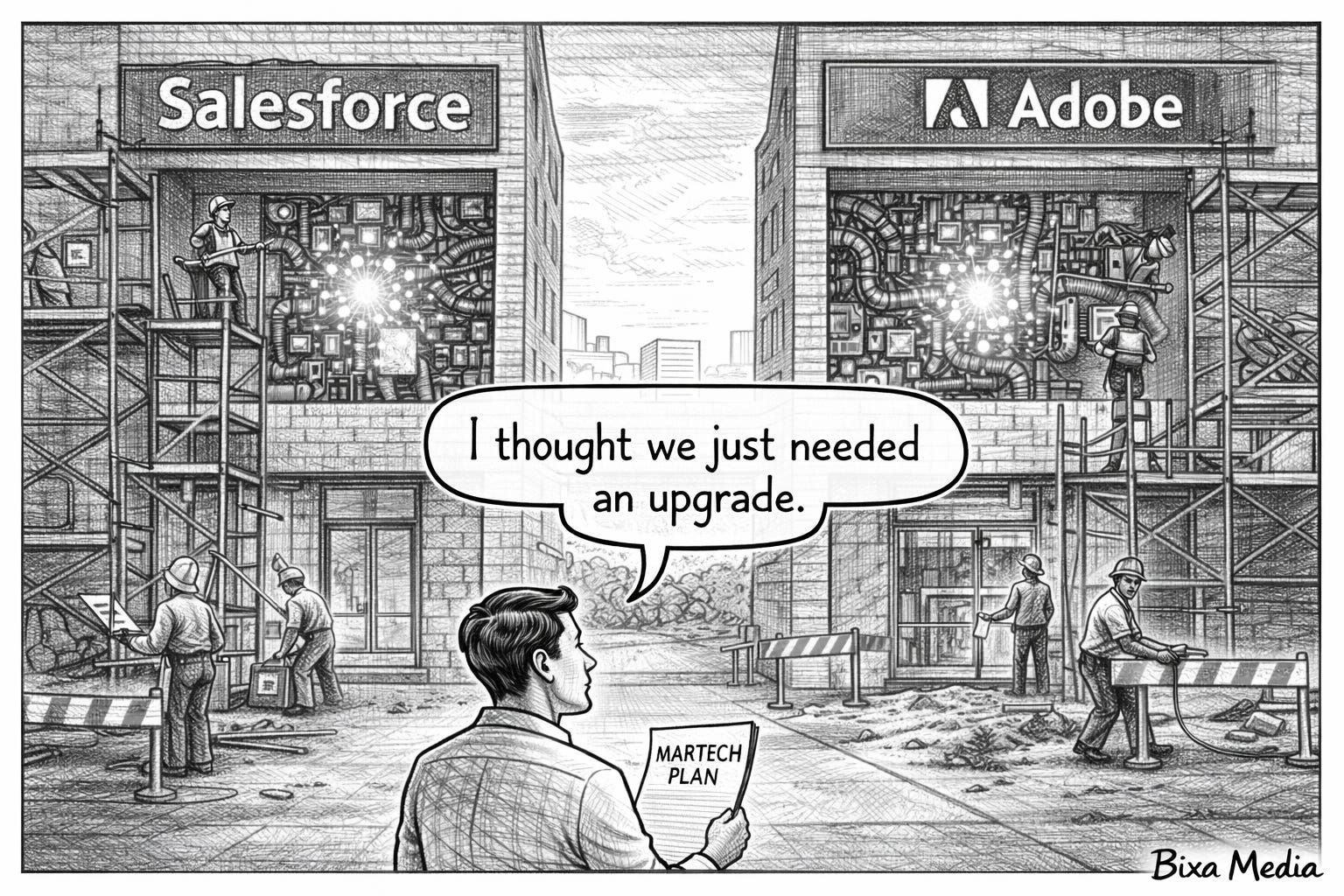
On April 15, Salesforce and Adobe each announced a fundamental shift in how their platforms work, and both moved in the same direction on the same day.
Salesforce launched Headless 360 at its annual TrailblazerDX developer conference. The announcement is straightforward in its implications: everything on Salesforce is now an API, an MCP tool, or a CLI command. Customer 360, Data 360, Agentforce, your data, your workflows, your business logic - all of it is now accessible directly by AI agents without anyone logging into a Salesforce interface. The platform also introduced the Agentforce Experience Layer, which decouples what an agent does from where it appears. Build an agent interaction once and it deploys natively across Slack, Teams, WhatsApp, ChatGPT, Claude, and Gemini without writing separate code for each surface. Salesforce also announced it is moving from per-seat licensing to consumption-based pricing for Agentforce - a direct acknowledgment that agents, not humans, are becoming the primary users of the platform.
Adobe announced Firefly AI Assistant the same day. The assistant brings Photoshop, Premiere, Lightroom, Express, Illustrator, and Firefly into a single conversational interface where creators describe the outcome they want and the assistant orchestrates and executes the multi-step workflow across apps. Adobe’s Experience Platform Agent Orchestrator has been live in enterprise marketing stacks since September 2025. Most teams are still not fully using it. Firefly AI Assistant extends that same agentic model into the creative workflow layer, adding to a capability set that is already further along than most teams realize.
One real-world data point worth noting: Engine, a B2B travel company featured in the Salesforce keynote, built its customer service agent in 12 days using Agentforce and now handles 50% of customer cases autonomously.
Why It Matters
When two of the most widely used platforms in marketing make the same architectural shift on the same day, the direction of the category is no longer ambiguous.
The shift is from platforms you log into to platforms agents operate inside of. The dashboard is not disappearing, but it is no longer the primary interface. Data, workflows, and business logic are being exposed as infrastructure that agents can call directly. For marketing teams, that changes what the job actually is. If the platform handles execution, the work that remains is strategy, oversight, and the quality of the instructions you give.
Most teams using Salesforce and Adobe today are still operating with a dashboard-first workflow. The architecture underneath them has changed. The workflows have not.
What This Means
The martech stack is becoming an orchestration layer, not just a set of dashboards. When Salesforce says everything is now an API and Adobe builds a single conversational interface across its entire creative suite, both companies are making the same bet: the next primary interface for marketing work is natural language and agent orchestration, not click-through UI. Teams that still think of these platforms as software to log into are already behind the architectural curve.
Salesforce’s pricing model change is the most underreported signal. Moving from per-seat to consumption-based pricing means Salesforce is explicitly designing for a world where agents - not humans - are the primary platform users. That is a business model bet with direct implications for how marketing teams budget and staff around these tools going forward.
The creative workflow is the last frontier for agentic marketing, and Adobe just opened it. Audience segmentation and campaign analytics have been getting the agentic treatment for months. Firefly AI Assistant brings that same model to creative production, the part of the workflow that has remained most stubbornly human. The gap between strategic direction and finished creative output is about to compress significantly.
What To Do
If your team uses Salesforce, find out whether Agentforce is already part of your contract. Many Salesforce customers have access to Agentforce features they have not activated. The Headless 360 launch is the right moment to evaluate what is already available in your instance before scoping new tooling.
If your team uses Adobe Creative Cloud or Experience Platform, pay attention to the Firefly AI Assistant public beta rollout in the coming weeks. The teams that figure out how to direct the assistant effectively, not just use it, will build a workflow advantage that compounds over time.
Use both announcements as a forcing function to audit your current martech workflows against the architecture that now exists. The gap worth closing is between what these platforms can already do and how your team currently uses them.
Ignore This If
You do not use Salesforce or Adobe products and your martech stack is not moving in an agentic direction.
Sources
Salesforce - Introducing Salesforce Headless 360. No Browser Required. (April 15, 2026)
VentureBeat - Salesforce launches Headless 360 to turn its entire platform into infrastructure for AI agents (April 15, 2026)
Adobe Newsroom - Adobe Ushers in a New Era of Creativity with Firefly AI Assistant (April 15, 2026)
Salesforce Ben - Salesforce Headless 360 and Agentforce Vibes 2.0 Revealed at TDX 2026 (April 15, 2026)
CIO - Salesforce launches Headless 360 to support agent-first enterprise workflows (April 15, 2026)
⚠️ Emerging Shifts
AI Didn't Break Your Marketing Workflows. It Just Made the Cracks Visible.
What’s Changed
A SmartBrief piece published in late March, written by Christine Royston, CMO of Wrike, puts hard numbers on something marketing leaders are quietly running into: 82% of knowledge workers already use AI on the job, and nearly 40% rely on three to five AI tools weekly. Yet 96% say AI would be significantly more valuable if their tools could automatically share context and work together. Only 23% of employees feel aligned with leadership on AI strategy. Fewer than half of companies have rolled out company-wide AI training or policies. And 42% of workers are using shadow AI - tools their organizations have not sanctioned - to fill the gaps.
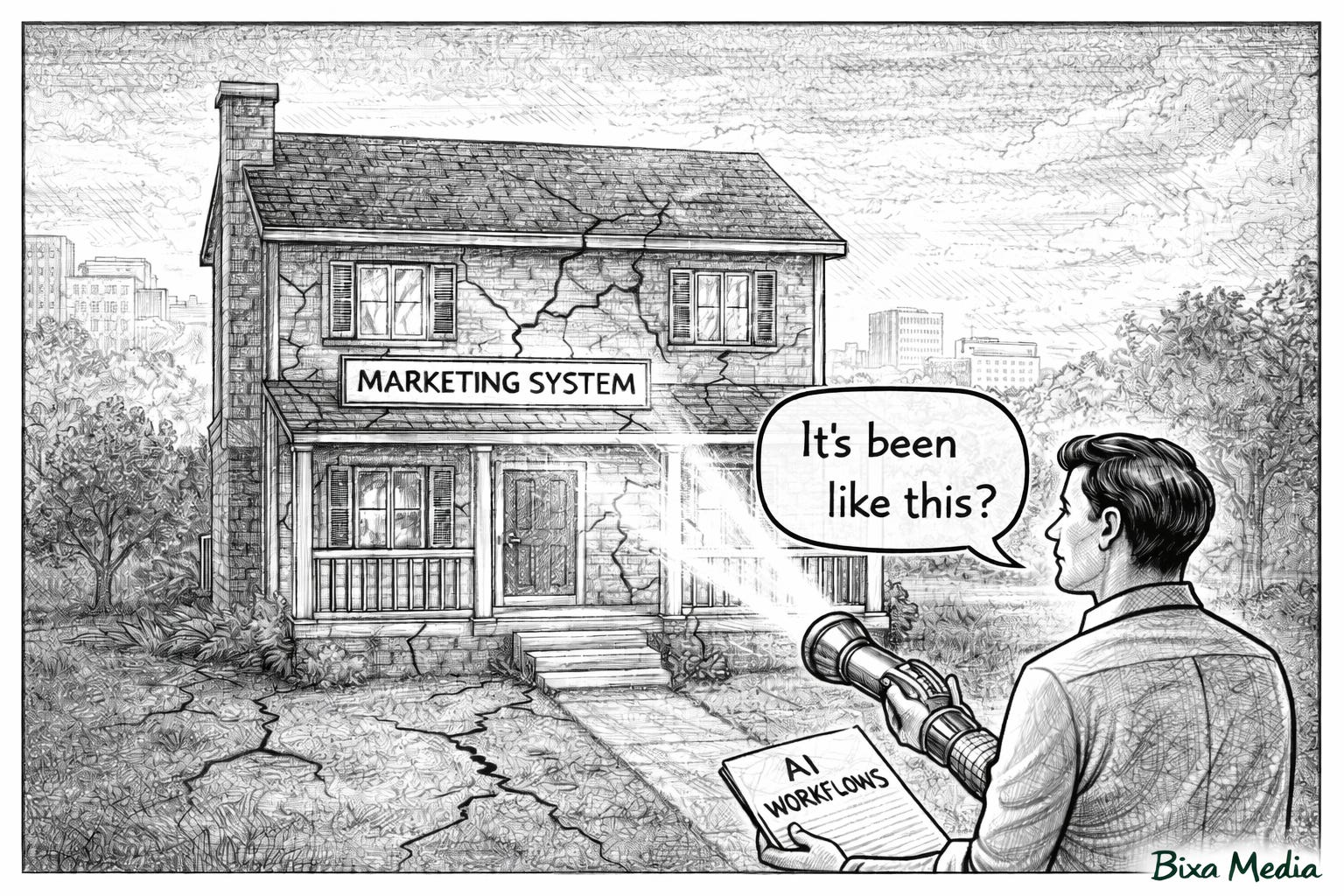
The diagnosis is straightforward: two years of AI tool adoption layered on top of workflows that were already broken. The tools accelerated output. The dysfunction scaled with it. More AI did not mean more clarity - it meant the same fragmentation moving faster, across more channels, with higher stakes attached.
Why It Matters
This story lands differently when read alongside the Salesforce and Adobe announcements from April 15. Those platforms just restructured themselves around the assumption that marketing workflows are connected, governed, and agent-ready. The SmartBrief data shows most teams are nowhere close.
The problem predates the tools. Most marketing workflows were already fragmented - disconnected hand-offs, siloed data, no single source of truth. AI didn’t create those conditions. It just removed the slack that was absorbing them. AI is now making that gap expensive: in duplicated work, misaligned output, and campaigns that move fast in the wrong direction.
What This Means
Tool adoption without workflow redesign is the most common AI mistake marketing teams are making right now. The Wrike research makes it concrete: 96% of workers say AI would be more useful if tools shared context automatically. Most teams asking for better AI connectivity never had connected workflows to begin with.
Shadow AI is a workflow signal, not a compliance problem. When 42% of employees are using unsanctioned AI tools, it means the official workflow is not meeting their actual needs. The instinct to crack down misses the real question: what is broken in the approved process that is pushing people toward workarounds?
Agentic platforms accelerate what is already there, good or bad. Salesforce and Adobe can now orchestrate across data, content, and campaigns autonomously. But that capability only delivers value if the workflows feeding those systems are clean, connected, and governed. Fragmented input produces fragmented output, faster.
What To Do
Before adding more AI tools, map how work actually moves through your marketing team today - from brief to approval to launch. Not how it is supposed to move. How it actually moves. The gaps in that map are where AI will create the most friction, not the most value.
Pick one workflow to redesign before you automate it. Campaign briefing, creative review, and performance reporting are the three places most teams have the most undocumented, inconsistent hand-offs. Fix the process first, then apply AI to accelerate it.
If shadow AI usage is visible on your team, treat it as a diagnostic. Ask which approved tools or processes people are working around and why, before restricting access.
Ignore This If
Your marketing workflows are already documented, connected across tools, and operating with a clear system of record for how work moves from brief to launch.
Sources
SmartBrief - 2026 will expose broken marketing workflows being masked by AI (March 2026)
If You Want Help With This
If your team is adding AI tools faster than you are redesigning the workflows underneath them, this is exactly the problem AI-Powered Marketing Department is built for.
It helps marketing teams build practical, repeatable AI workflows, so the tools you already have start working together instead of creating more fragmentation.
Learn more about AI-Powered Marketing Department here.
Or start with a free preview here.
AI Agents Can Now Complete Two Thirds of Real Computer Tasks. A Year Ago It Was One in Eight.
What’s Changed
Stanford’s 2026 AI Index Report, released this month, tracks AI performance across capability domains with independent, data-driven sourcing. One number stands out for anyone thinking about marketing operations: on OSWorld - a benchmark that tests AI agents on real computer tasks across operating systems - task success jumped from 12% to approximately 66% in a single year.
That is a fivefold improvement in twelve months. The same report documents that on SWE-bench Verified, which tests AI on real software engineering tasks, performance rose from 60% to near 100% of the human baseline in one year. Organizational AI adoption has reached 88% of surveyed companies. And the estimated value of generative AI tools to U.S. consumers reached $172 billion annually by early 2026 - up from $112 billion a year prior, with the median value per user tripling over that period.
The counterweight is worth noting. Agents still fail roughly one in three tasks on structured benchmarks. Agent deployment sits in single digits across nearly all business functions. And the same models that solve PhD-level science problems read analog clocks correctly just 50.1% of the time.
Why It Matters
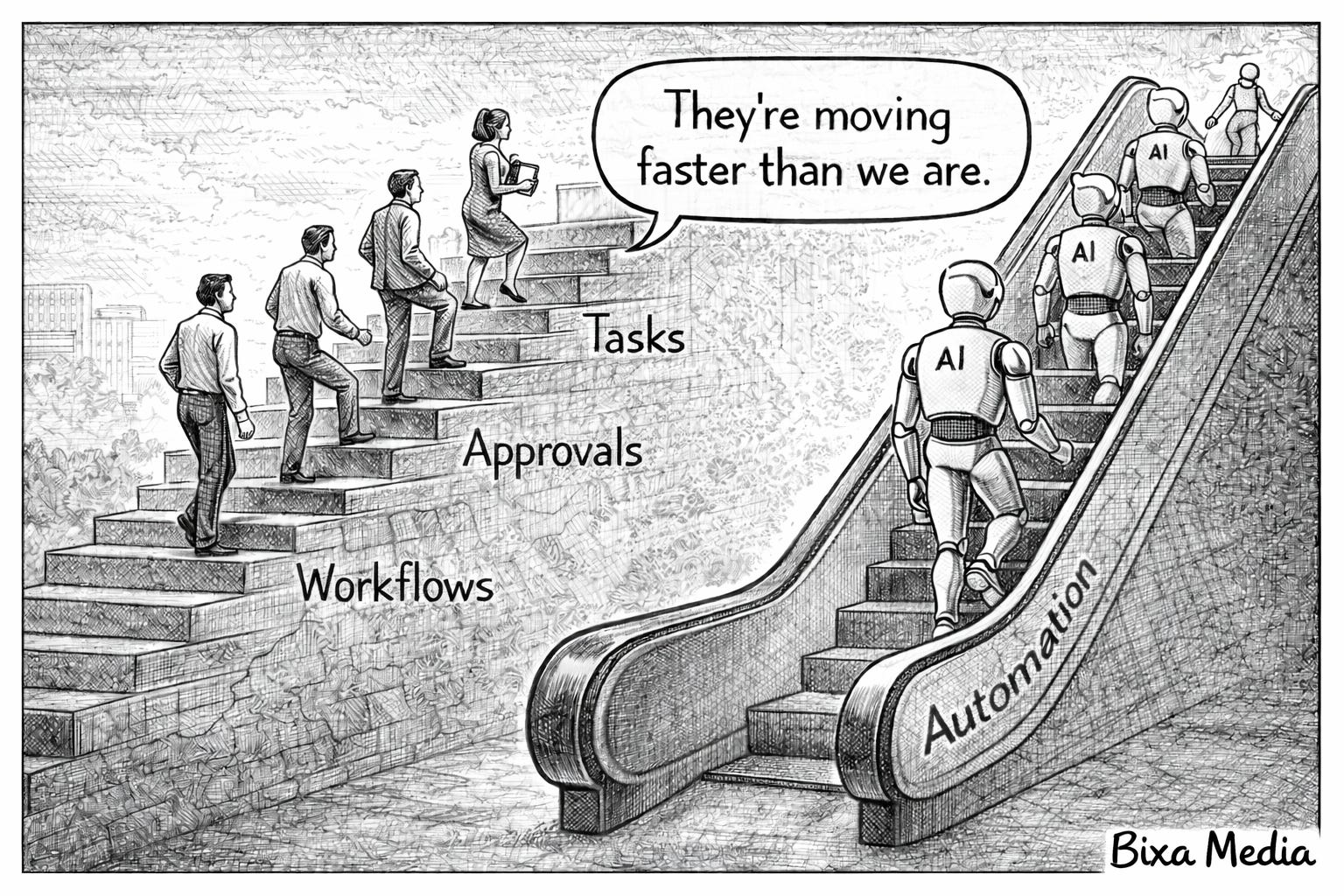
The 12% to 66% jump is the number that changes the conversation about agents from theoretical to operational. At 12%, agents were curiosities - useful in narrow conditions, unreliable enough to require constant supervision. At 66%, they are viable for a meaningful range of real marketing tasks: research, reporting, content QA, campaign monitoring, data summarization, and workflow execution.
The failure rate still matters. One in three tasks failing is not acceptable for anything customer-facing or brand-critical without a human review layer. But for internal operations - the work that happens before anything reaches a customer - that threshold is workable and improving fast.
What This Means
The operational case for agents in marketing is no longer speculative. A 66% task success rate on real computer tasks means agents can reliably handle a meaningful portion of the repetitive, high-volume operational work that consumes marketing teams. The question has shifted from whether agents can do the work to which work is worth delegating first.
The failure rate defines where human oversight is non-negotiable. One in three tasks still fails. Any agent-driven workflow touching customer communications, brand assets, paid media, or public-facing content needs a human checkpoint. The teams that will get burned are the ones treating 66% as good enough across the board rather than as a starting point for scoping where agents are safe to run.
Deployment is still early, which means the window for advantage is open. Agent deployment sits in single digits across nearly all business functions. Most organizations that report using AI are not yet running agents in production. The gap between adoption and deployment is where the competitive opportunity currently lives.
What To Do
Use the 66% benchmark as a scoping tool, not a green light. Map your marketing tasks by two criteria: repetition and stakes. High repetition, lower stakes - performance reporting, content tagging, briefing summaries, competitive monitoring - are where agents are most viable right now. High stakes, customer-facing work stays under human oversight until the reliability curve improves.
If you have not started testing agents on any internal workflow, pick one task this quarter and run a structured pilot. The teams building operational experience with agents now will have a meaningful head start when deployment becomes standard practice.
Ignore This If
You are not evaluating or using AI agents in any part of your marketing workflow and have no plans to in the near term.
Sources
Stanford HAI - 2026 AI Index Report (April 2026)
Artificial Studio - The State of AI in 2026: insights from Stanford’s Index report (April 2026)
Digit - Stanford AI Index 2026 report: 5 key insights on AI adoption and competency (April 2026)
Innovative Human Capital - The Asymmetric Machine: What the 2026 AI Index Tells Us About Where We Actually Are (April 2026)
👀 Keep An Eye On
The AI Workspace Is Consolidating. OpenAI Is Merging Its Tools Into One Platform.
What’s Changed
In March, OpenAI confirmed plans to merge ChatGPT, its Codex coding agent, and its Atlas browser into a single unified desktop application. The full merger has no official launch date yet, but the pieces are already in motion. Codex launched on Windows on March 4. Atlas has been in beta since March. ChatGPT 5.5 launched April 6 with improved memory and task continuity. The three products - previously separate tools requiring separate sessions and context - are being brought into one interface where you can move between conversation, research, and autonomous task execution without switching windows or rebuilding context.
Codex handles coding and background task execution. Atlas browses, understands, and acts on web pages on your behalf. ChatGPT coordinates everything. The planned unified app includes multi-agent parallel execution, reusable agent workflows, scheduled background tasks, and AI action tracking for enterprise teams. OpenAI’s CEO of Applications, Fidji Simo, framed the move as a product focus decision: consolidating bets that are working rather than maintaining a fragmented product surface.
ChatGPT now has 900 million weekly users. Over one million companies use OpenAI’s agents in daily operations. The super app is OpenAI’s move to make that usage stickier, deeper, and harder to replace.
Why It Matters
The pattern playing out across this issue - Meta rebuilding its intelligence layer, Microsoft embedding first-party models into its productivity suite, Salesforce and Adobe restructuring around agents - is showing up inside the tool many marketing teams already use daily.
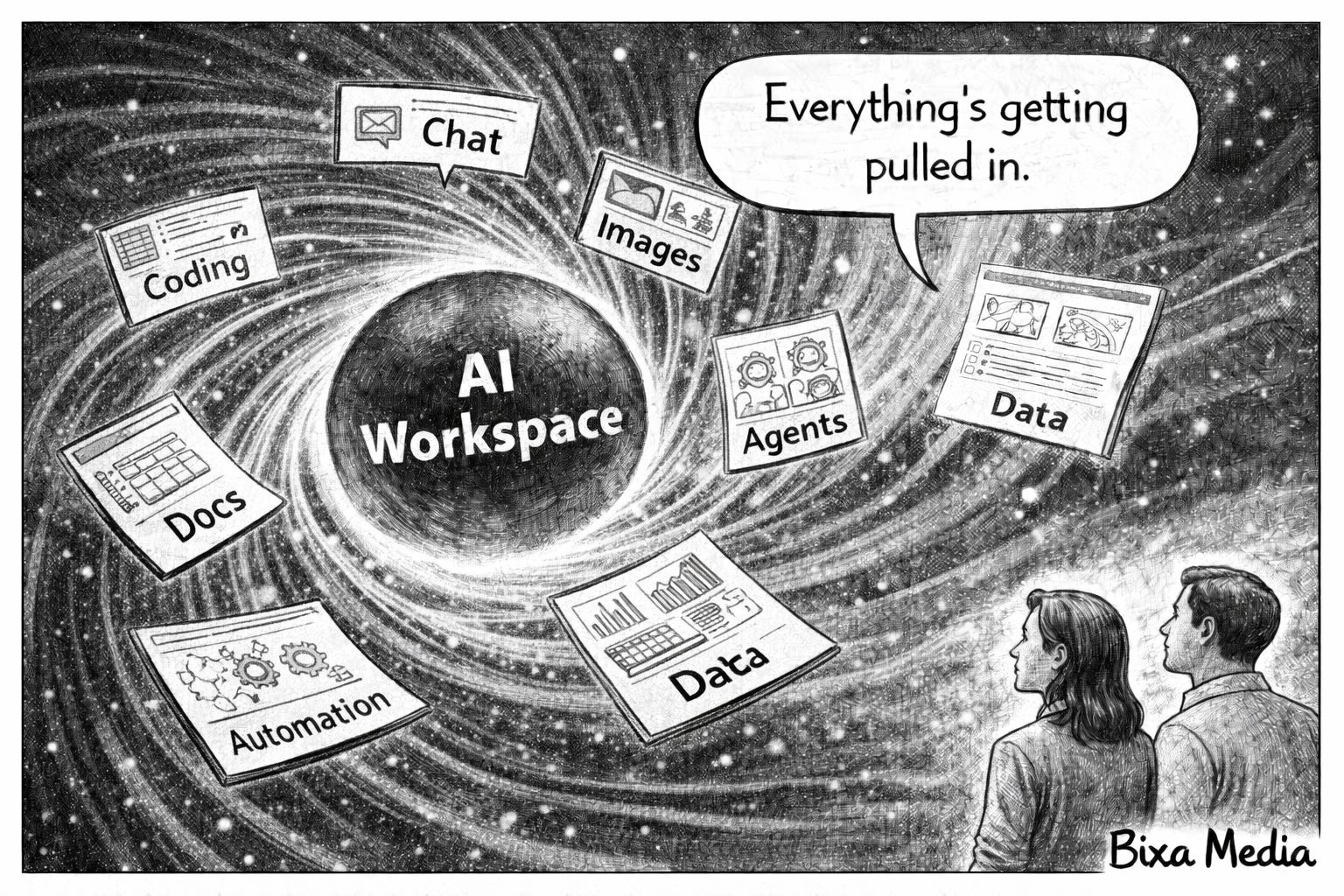
The shift from ChatGPT as a prompt-and-response tool to ChatGPT as a persistent workspace changes how teams should think about using it. Research, drafting, competitive monitoring, and task execution that currently happen across multiple tools and require manual context transfer between them can increasingly happen inside one session. Most teams using ChatGPT today are using a fraction of what the platform now supports.
What This Means
The AI interface is becoming a work hub, and the tools you use separately today may consolidate inside it. ChatGPT already handles conversation, research, image generation, and code. The super app adds autonomous browsing and background task execution. Teams that treat it as a chat tool are underusing a platform that is now closer to an operating layer for knowledge work.
Context continuity is the real unlock. The friction in most AI-assisted workflows is not the individual task, it is rebuilding context every time you switch tools or start a new session. A unified workspace that maintains context across conversation, research, and execution removes the most common bottleneck in how marketing teams currently work with AI.
Enterprise adoption signals where this is heading. Over a million companies are already using OpenAI agents in daily operations, and 40% of OpenAI’s revenue now comes from enterprise. The super app is being built with IT governance, action tracking, and access controls designed for business use.
What To Do
If your team uses ChatGPT primarily as a writing or research tool, spend 30 minutes exploring what agent mode and the current workspace already support. The gap between how most teams use it and what it can now do is significant - and the super app has not fully launched yet, meaning the capability floor is still rising.
Watch how your team’s workflow across research, briefing, drafting, and review could be compressed into fewer tools and fewer context switches. The value is in reducing how much time and effort surrounds the decisions, not in making the decisions themselves.
Ignore This If
Your team does not use ChatGPT in any regular workflow and has no plans to evaluate it.
Sources
CNBC - OpenAI to create desktop super app, combining ChatGPT app, browser and Codex app (March 19, 2026)
OpenAI - Introducing ChatGPT agent: bridging research and action (OpenAI.com)
Digital Strategy AI - Exploring OpenAI Codex: Features of the 2026 SuperApp (April 14, 2026)
OpenClaw Is Shipping Fast. The Security Picture Is Getting Clearer, and It's Not Comfortable.
What’s Changed
In the last issue, we covered OpenClaw’s explosive growth and the security warnings that followed. Both have continued accelerating.
On the capability side: OpenClaw released two major updates in April alone - versions 2026.4.12 and 2026.4.14 - adding cloud-backed memory, active memory sub-agents, GPT-5.4 support, Gemini text-to-speech, improved multi-agent coordination, and broader plugin integrations across Slack, Telegram, and messaging platforms. The project now has 347,000 GitHub stars, up from 247,000 in early March.
On the security side: researchers have now tracked 138 CVEs (Common Vulnerabilities and Exposures) against OpenClaw since February, including 7 critical and 49 high severity. The April 2026 batch alone covered 13 vulnerabilities, two at critical severity, patched in version 2026.4.5. Over 135,000 OpenClaw instances are currently exposed on the public internet across 82 countries. Of those, 63% are running without any authentication. Security researchers tracking ClawHub - OpenClaw’s plugin marketplace - have confirmed over 824 actively distributed malicious skills, including keyloggers and credential stealers targeting OAuth tokens and API keys.
The recommended posture from security experts is now unambiguous: if your organization has employees or contractors running OpenClaw, assume compromise. Audit what the tool has accessed, rotate credentials for every connected service, and treat every session it has touched as potentially compromised until you can verify otherwise.
Why It Matters
The pace of OpenClaw’s shipping is the signal worth tracking, not any individual release. Two major updates in two weeks, model integrations keeping pace with frontier releases, memory and multi-agent capabilities maturing rapidly - this is a project moving faster than most enterprise software teams can evaluate it.
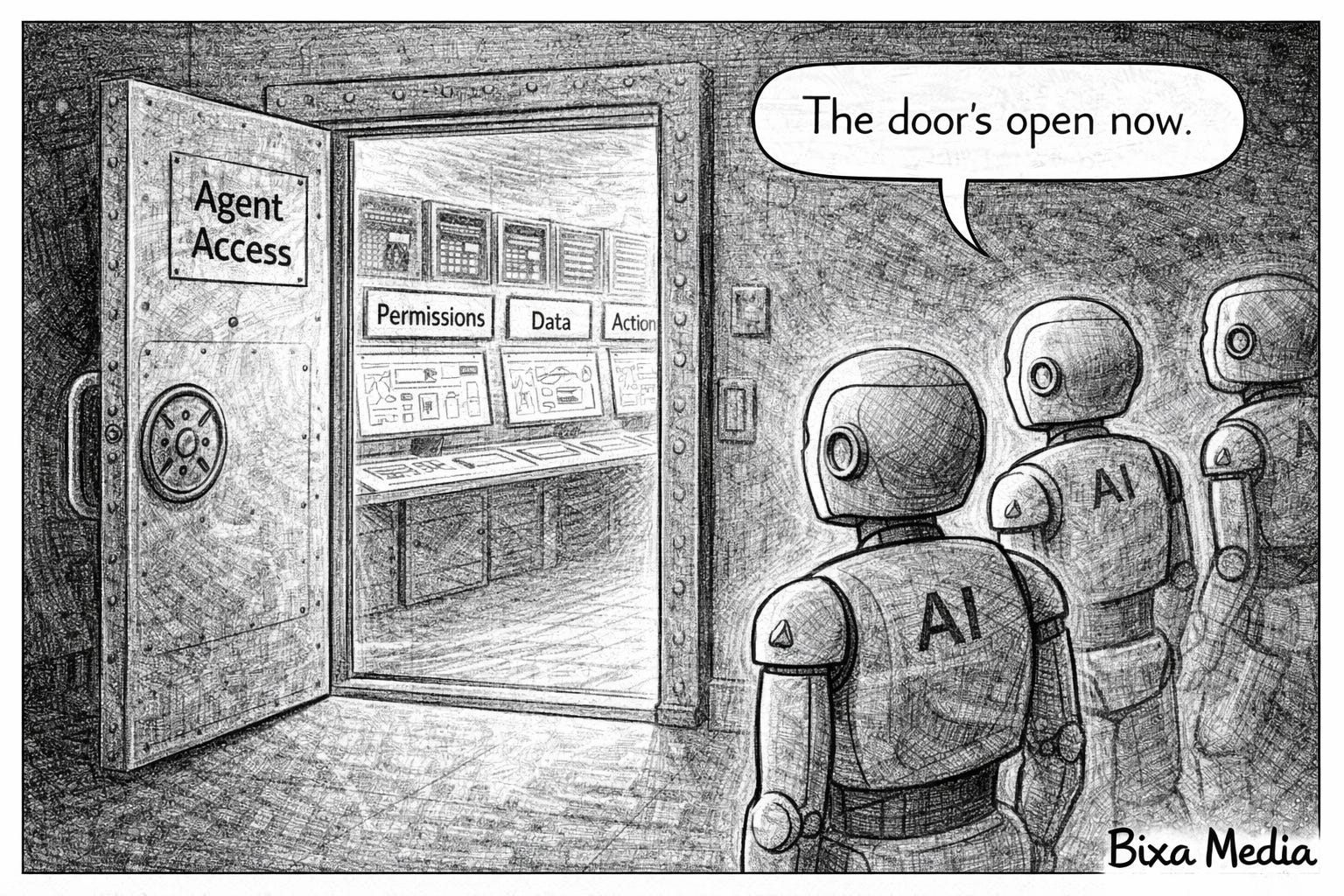
The security picture is the counterweight. Every capability OpenClaw adds - deeper memory, broader platform integrations, more autonomous agent coordination - also expands the attack surface. The architectural problem has not changed: OpenClaw operates with the same permissions as the user running it. A single compromised plugin does not isolate to one app. It touches everything the user has connected.
For marketing teams, the practical question is not whether to use OpenClaw specifically. Most won’t. The question is whether the same pattern - rapid capability expansion, lagging security governance - is showing up in the agentic tools your team is already using.
What This Means
Rapid capability growth and rapid vulnerability growth are happening simultaneously. OpenClaw is not slowing down on either front. Every new integration - memory, multi-agent coordination, platform connections - also creates new attack surface.
The architectural risk is not a bug. It is a design reality. OpenClaw works by operating with the same permissions as the user running it. That is what makes it powerful. It is also what makes a compromise so costly - a single vulnerable plugin does not expose one app, it exposes everything the user has connected. That design tradeoff exists in varying degrees across most agentic tools, not just OpenClaw.
The pattern matters more than the tool. Most marketing teams will never run OpenClaw. But the same dynamic - autonomous tools with broad permissions, security governance lagging behind capability rollout - is playing out across the agentic tools category. OpenClaw is just the most visible case study.
What To Do
If anyone on your team is running OpenClaw, update to version 2026.4.5 immediately and audit connected credentials. If you cannot confirm they are on a current version, treat the environment as compromised and rotate API keys and OAuth tokens for every connected service.
More broadly, use OpenClaw as a reference case when evaluating any agentic tool. Before deployment, ask: what permissions does this tool have, what happens if it is compromised, and what is the process for auditing what it has done?
Ignore This If
No one on your team is using OpenClaw or evaluating open-source agent frameworks.
Sources
Startup Fortune - OpenClaw Users Should Assume Compromise, Security Experts Warn (April 2026)
Blink - OpenClaw April 2026 New CVEs Security Patch Guide (April 2026)
GitHub - OpenClaw Release Notes (April 14–15, 2026)
CVEFind - OpenClaw Security 2026: 138 CVEs, Complete Vulnerability Guide (April 2026)
Ars Technica - Here’s why it’s prudent for OpenClaw users to assume compromise (April 2026)
The Bottom Line
Most teams are one workflow audit away from getting significantly more out of the tools they already pay for.
The platforms are ready. The question is whether your team is operating in a way that takes advantage of them.
The advantage in 2026 will go to the teams who changed their workflows and drove measurable performance gains because of it.
Which of these changes is already showing up in your stack, and which ones still feel like someone else's problem? I'd love to hear where your team is in the comments.
If you want more issues like this, subscribe to Marketing Seeds and share this newsletter with a friend, colleague, or team member who is trying to close the gap between what AI can do and how their marketing actually runs.