

Agentic AI went mainstream this quarter.
Open-source agents hit millions of users. Google standardized protocols for agent-driven commerce. ChatGPT became an ad platform.
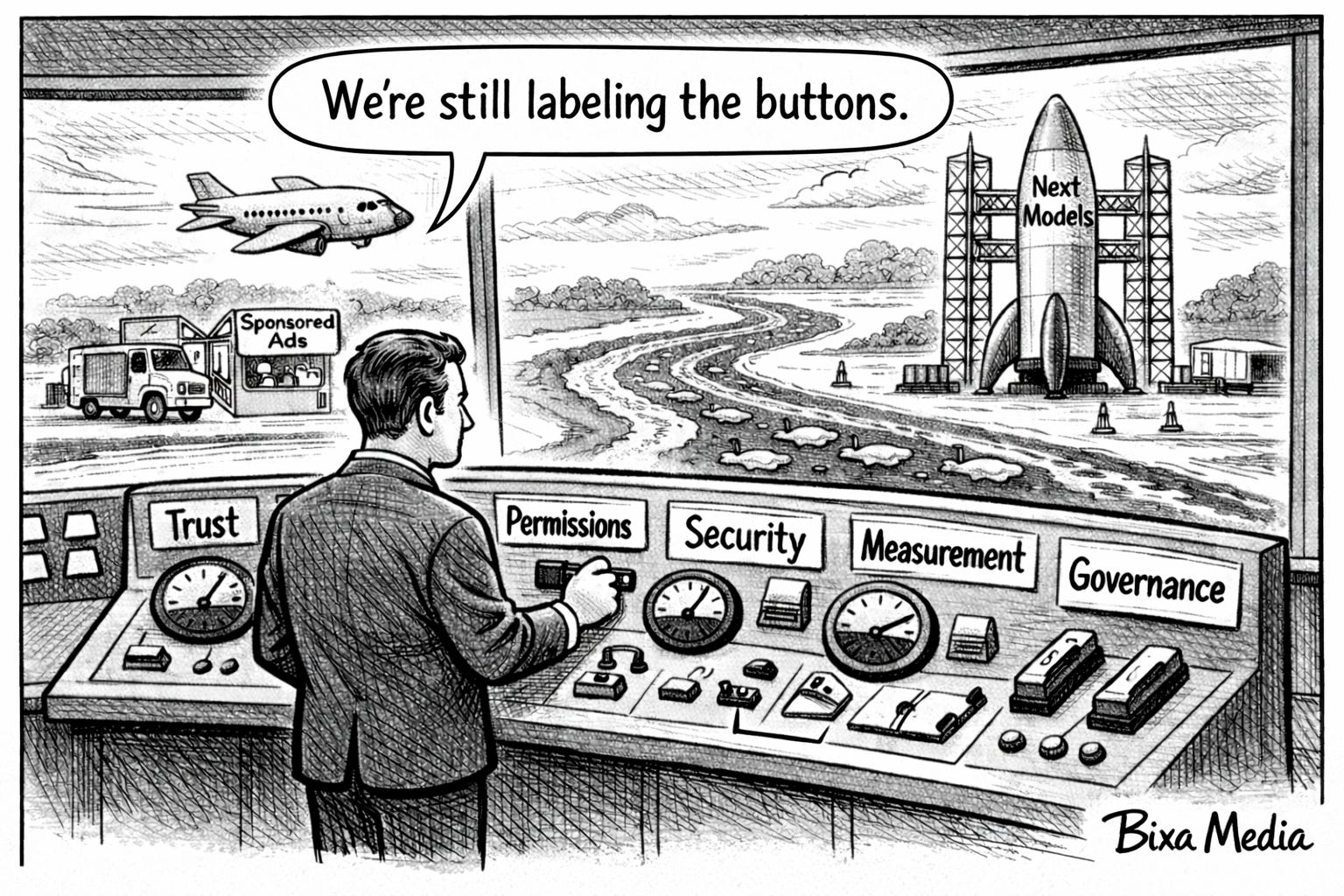
And in every case, the security, governance, and measurement systems around these tools are trailing behind the capabilities themselves.
This issue covers where that gap is showing up and what it means for marketers paying attention.
🔥 High Impact
The AI Agent Era Is Here. Security and Control Will Decide Who Trusts It.
What’s Changed
OpenClaw, an open-source AI agent framework built by Austrian developer Peter Steinberger, has become the fastest-growing open-source project in history. Originally a side project created in November 2025, it hit 247,000 GitHub stars by early March 2026. Steinberger has since joined OpenAI to work on personal agents, and the project is moving to an independent foundation.
Unlike a chatbot, OpenClaw does not just answer questions. It acts. It can manage calendars, check into flights, write and execute code, browse the web, and coordinate tasks across messaging apps like WhatsApp, Telegram, and Signal. It runs locally and connects to whichever AI model the user chooses.
That capability has attracted serious institutional interest. At GTC 2026, NVIDIA CEO Jensen Huang called OpenClaw “the operating system for personal AI” and announced NemoClaw, an enterprise stack that adds security sandboxing, privacy controls, and local model support to OpenClaw in a single command. NVIDIA built NemoClaw in collaboration with Steinberger and designed it to run on any hardware.
At the same time, adoption has outpaced governance. China saw a rapid wave of consumer and enterprise adoption, with Tencent, Alibaba Cloud, and ByteDance building services on top of OpenClaw and local governments subsidizing installation. That enthusiasm triggered an equally fast security backlash. China’s National Cyber Security Emergency Response Team published warnings about severe default configuration risks, prompt injection vulnerabilities, and malicious plugins. Chinese authorities restricted state-owned enterprises and government agencies from running OpenClaw on office devices. Gartner separately described it as an “unacceptable cybersecurity risk” for business users and recommended running it only in isolated environments with throwaway credentials.
By the end of March, over 63,000 live OpenClaw instances were confirmed on the public internet, many with open SSH ports, exposed databases, and minimal authentication.
Why It Matters
Agentic AI is not new. Enterprise platforms have been shipping agent features for months, and we covered Salesforce’s Agentforce rollout in the last issue. What OpenClaw changed is who has access.
By making a fully autonomous agent available to anyone with a messaging app, running locally and for free, it compressed the adoption curve that enterprise tools would have taken years to play out. Millions of people tried it. Security researchers immediately found real vulnerabilities.
The pattern playing out around OpenClaw will repeat. Consumer enthusiasm moves first. Enterprise interest follows. Security and governance scramble to catch up. Marketers do not need to use OpenClaw specifically, but they need to understand what it signals, because the tools they already use are heading in the same direction.
What This Means
Demand for AI that acts, not just responds, is massive and mainstream. OpenClaw proved this is not just an enterprise category. Its creator describes 2026 as ‘the year of the general agent.’ When NVIDIA builds an enterprise wrapper and OpenAI hires the creator, the infrastructure is being built around a category that now has consumer-scale pull, not just vendor push.
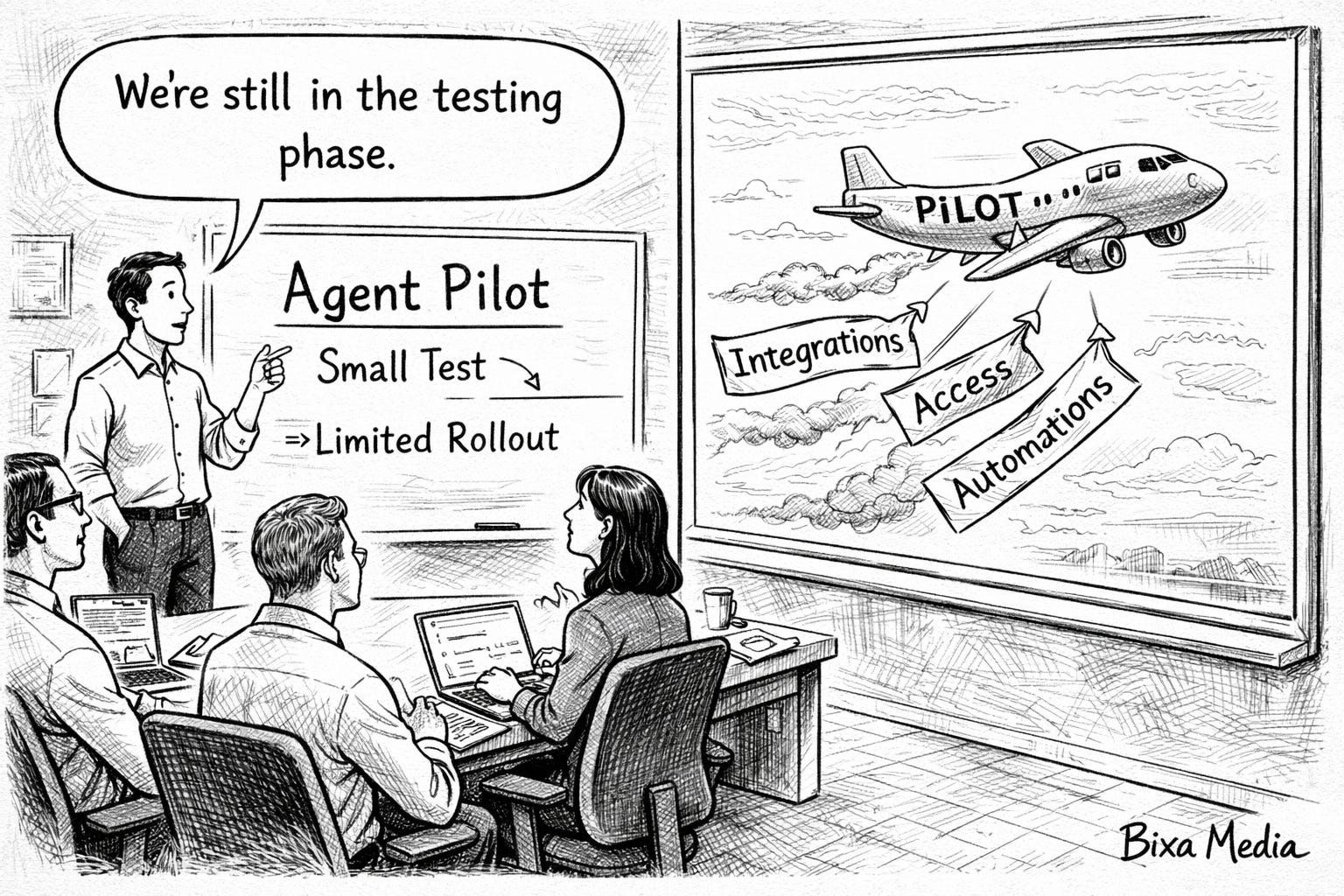
Enterprise adoption requires a security and permissions layer that does not exist yet. NVIDIA’s NemoClaw is an early attempt to close the gap between what agents can do and what organizations can safely allow. But it launched as an alpha release. The security story is still being written.
The trust gap is real and growing. Over 63,000 exposed instances. Prompt injection attacks. Malicious plugins that exfiltrate data. A maintainer warning that if you cannot understand the command line, the tool is too dangerous for you to use safely. Enthusiasm is running well ahead of readiness.
This is a global story, not just a Silicon Valley one. China’s adoption wave, followed by government restrictions and published best practices, is the first large-scale case study in how a country navigates the gap between agent capability and agent governance. Other markets will face the same tension.
What To Do
If your team is already using AI tools with any level of autonomous action, audit what permissions those tools have today. The gap OpenClaw exposed is not unique to OpenClaw. It applies to any tool that can access your data, take actions, or connect to other systems on your behalf.
Establish basic internal standards before you need them: what systems can an agent access, what actions require human approval, and how do you audit what it did.
Pay attention to where agent capabilities are showing up inside platforms you already use. CRMs, ad platforms, and content tools are all adding autonomous features. Each one introduces the same trust and permissions questions OpenClaw surfaced at scale.
Ignore This If
Your team has no exposure to AI tools that take autonomous actions and you are not evaluating any for the near future.
Sources
TechXplore - OpenClaw’s creator says 2026 could be the year of general AI agents (Mar 30, 2026)
NVIDIA Newsroom - NVIDIA Announces NemoClaw for the OpenClaw Community (Mar 16, 2026)
TechCrunch - Nvidia’s version of OpenClaw could solve its biggest problem: security (Mar 16, 2026)
The Wire China - How the OpenClaw Frenzy Is Testing China’s AI Commitment (Mar 29, 2026)
Bloomberg - China Moves to Limit Use of OpenClaw AI at Banks, Government Agencies (Mar 11, 2026)
The Register - China’s CERT warns OpenClaw can inflict nasty wounds (Mar 12, 2026)
TechCrunch - OpenClaw creator Peter Steinberger joins OpenAI (Feb 15, 2026)
ChatGPT Is Now an Ad Platform, and It's Scaling Fast
What’s Changed
OpenAI began testing ads inside ChatGPT in February 2026 for US users on its Free and Go subscription tiers. By late March, the ad business had surpassed $100 million in annualized revenue with more than 600 advertisers participating. OpenAI is now expanding the pilot to Canada, Australia, and New Zealand, with more markets planned later this year.
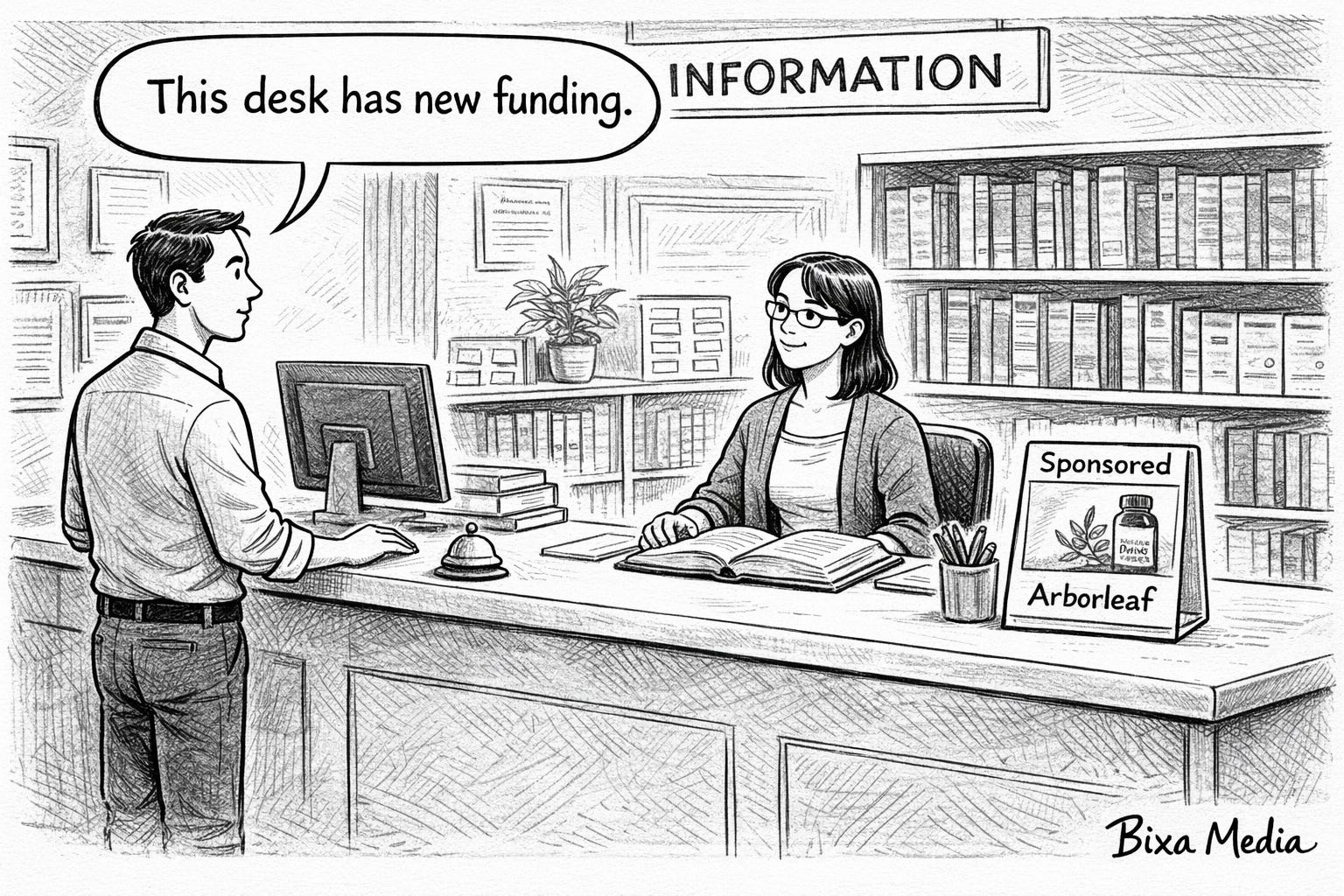
Ads appear at the bottom of ChatGPT responses, clearly labeled as sponsored. They are matched to the topic of the conversation, past chats, and prior ad interactions. Advertisers do not have access to user conversations or personal data, only aggregate performance metrics. Paid tiers (Plus, Pro, Business, Enterprise, Education) remain ad-free.
Three of the world’s largest ad agency groups, WPP, Omnicom, and Dentsu, are part of the testing program. OpenAI has also hired former Meta advertising executive David Dugan to lead ad sales. A recent Truist analyst note called 2026 an “inflection year” for LLM-powered ads, estimating OpenAI could generate under $1 billion in ad revenue this year, growing to over $30 billion by 2030.
Why It Matters
This is a new advertising surface materializing faster than most teams expected.
ChatGPT users are often in research mode: comparing options, exploring decisions, working through problems. That is high-intent attention. Placing ads inside that context is fundamentally different from a banner alongside search results or a sponsored post in a social feed. The user’s intent is already deeply qualified by the conversation itself.
For marketers, this raises a practical question: is this a channel worth testing, or is it too early? The honest answer is that it depends on your category. The current rollout is conservative. Some advertisers have committed $200,000-$250,000 to the test, and the volume of data coming back is still limited. But the trajectory is clear.
What This Means
This makes AI more usable across everyday marketing work, not just isolated tasks:
AI conversations are becoming monetized surfaces. It is live, generating real revenue, and expanding internationally. The pattern that played out with search ads and social ads is beginning again inside AI interfaces.
Intent signals inside AI conversations may be more valuable than traditional search signals. When someone asks ChatGPT to compare three project management tools for a 10-person team, the context is richer than a keyword search. If ad targeting can use that conversational depth effectively, the format could outperform traditional placements for high-consideration purchases.
The separation between answers and ads is being tested at scale for the first time. OpenAI says ads do not influence ChatGPT’s responses. That claim is now being pressure-tested with hundreds of millions of users and 600+ advertisers. Whether that separation holds as the program scales will shape how much trust users and marketers place in the platform.
What To Do
If you run paid media, start tracking ChatGPT as an emerging channel. Understand how ad eligibility works (currently through Performance Max-style contextual matching, not keyword targeting).
If your category involves high-consideration decisions where users are likely researching through AI, this format may be worth testing early. Early movers will have competitive data that latecomers cannot replicate.
If you are primarily a content creator or publisher, recognize that this further fragments the discovery landscape. Another surface where users may find answers, products, and recommendations without visiting your site.
Ignore This If
You do not run paid media and AI-driven discovery is not relevant to your business model.
Sources
PYMNTS - OpenAI Expands ChatGPT Advertising to More Markets After US Pilot (Mar 27, 2026)
OpenAI - Testing ads in ChatGPT (Feb 9, 2026)
OpenAI - Our approach to advertising and expanding access to ChatGPT (Jan 16, 2026)
CNBC - ChatGPT’s ads have the industry excited, but insiders are frustrated by the slow rollout (Mar 20, 2026)
TechCrunch - ChatGPT rolls out ads (Feb 9, 2026)
⚠️ Emerging Shifts
Google Is Building the Operating System for Agent-Driven Commerce
What’s Changed
In the last issue, we covered AI shopping becoming an acquisition channel as platforms began enabling purchases inside AI interfaces. Since then, the infrastructure layer beneath that shift has moved fast.
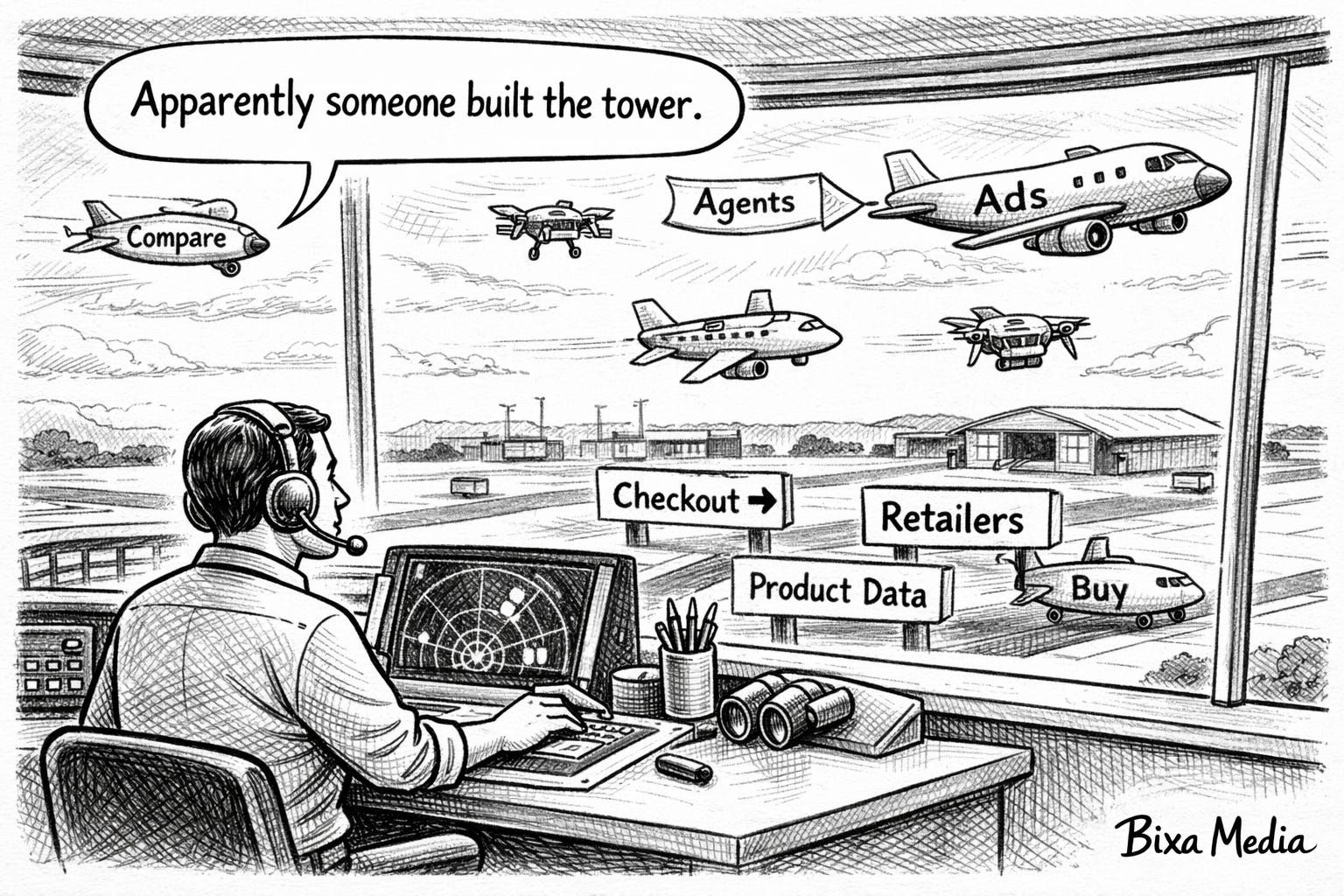
The protocols that let AI agents browse, compare, buy, and negotiate on behalf of users are now production-ready and backed by an industry coalition. Google’s Agent-to-Agent protocol (A2A) reached v1.0 in early 2026. It sits alongside Anthropic’s Model Context Protocol (MCP), Google’s Universal Commerce Protocol (UCP), and others, each handling a different layer: MCP connects agents to tools and data, A2A lets agents communicate with other agents, and UCP standardizes how agents handle shopping, checkout, and transactions.
In December 2025, Anthropic, Google, OpenAI, and Block founded the Agentic AI Foundation under the Linux Foundation to govern these protocols collectively. As of March 2026, that foundation has 146 members including AWS, Microsoft, Salesforce, Shopify, and JPMorgan Chase.
On the commerce side, UCP-powered checkout is now live inside AI Mode, with Shopify, Target, and Walmart coming next. Two new ad formats surface sponsored retailer listings and travel placements inside AI Mode conversations. And AI Max for Search, which uses keywordless targeting to match ads to user intent, is now available to all advertisers.
Why It Matters
The March 23rd story was about AI shopping arriving as a channel. This is about the plumbing becoming standardized.
When an industry coalition of this size agrees on how agents interact with tools, with each other, and with commerce systems, the shift stops being experimental. It becomes infrastructure that the rest of the ecosystem builds on.
For marketers, the new development is not the advice to clean up product data. That stands. The new development is that Google is now running ads inside these agent-mediated conversations, and the protocols that power agent commerce are no longer controlled by any single company. Both of those change the timeline from “prepare for this” to “this is live.”
What This Means
Ads inside AI Mode are no longer experimental. Google has made it clear that 2026 is the year these placements become a primary format. The user’s intent is already deeply qualified by the conversational context before the ad appears, which changes how relevance and performance should be evaluated.
Agent protocols are now industry-governed infrastructure. 146 organizations backing a shared standard means this is not a single platform’s bet. The protocols are designed to work across vendors and frameworks, which accelerates how quickly agent-driven interactions will show up in the tools marketers already use.
Marketing may need to account for machine-to-machine interactions. When agents can negotiate, compare, and transact autonomously, the competitive surface shifts from persuading a human to being selected by a system. That is a fundamentally different optimization problem, and it is arriving faster than most teams are planning for.
What To Do
Start monitoring AI Mode as a separate channel in Google Ads reporting.
If you took action on product data quality after the last issue, pressure-test whether your feeds are consistent across platforms. Google is now enforcing multi-channel product ID consistency in Merchant Center.
Watch for agent protocol support inside the platforms you already use. When your CRM, ad platform, or commerce tools start referencing MCP, A2A, or UCP, that is the signal to pay closer attention.
Ignore This If
You do not sell products or services online and are not dependent on search-driven discovery.
Sources
Google Developers Blog - Announcing the Agent2Agent Protocol (A2A) (Apr 9, 2025)
Google Developers Blog - Developer’s Guide to AI Agent Protocols (Mar 19, 2026)
Google Blog - What to expect in digital advertising and commerce in 2026 (Feb 11, 2026)
Search Engine Land - Google outlines AI-powered, agent-driven future for shopping and ads in 2026 (Feb 11, 2026)
A2A Protocol - Official Documentation (Linux Foundation)
Search Budgets Are Shifting Toward AI Visibility
What’s Changed
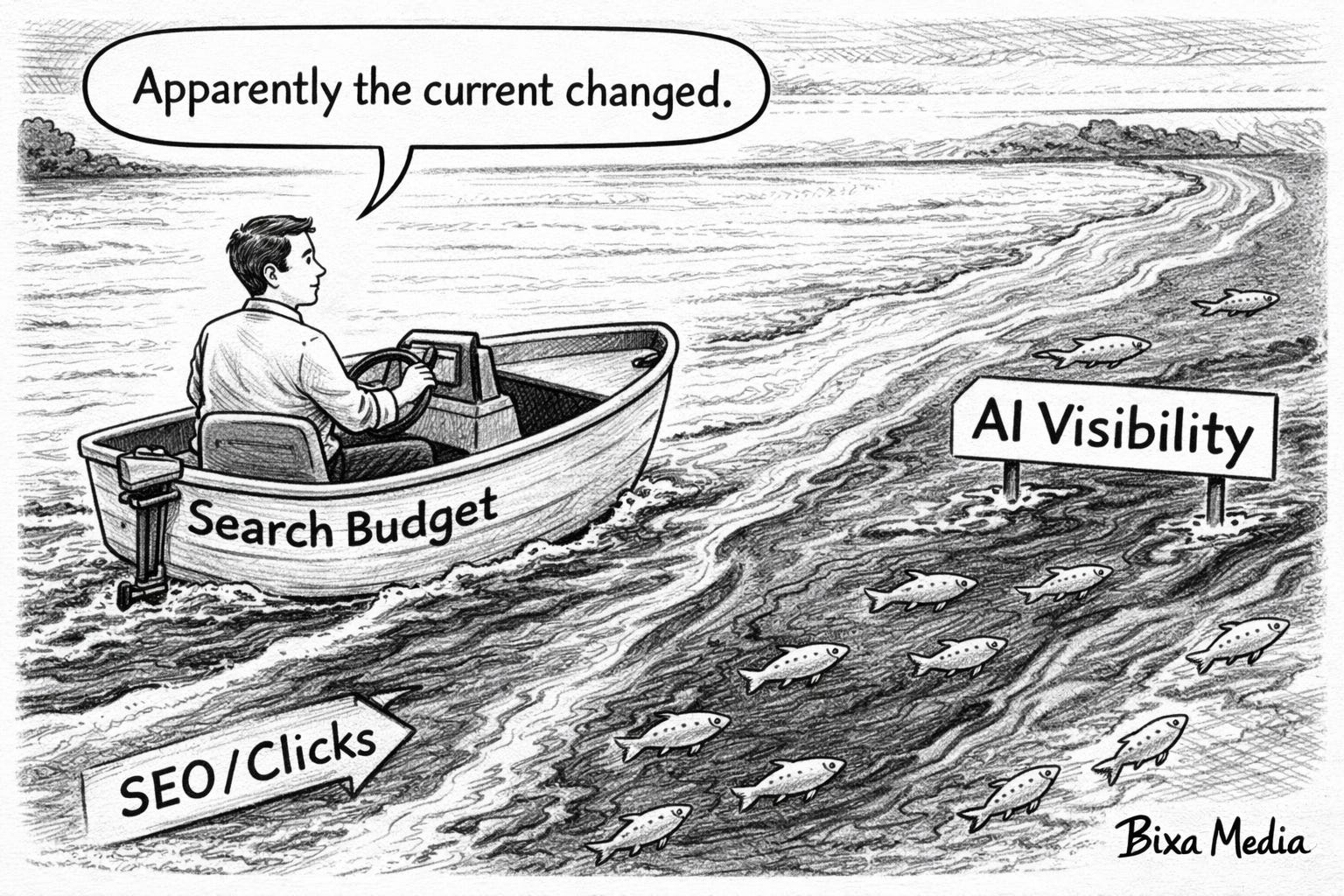
Marketers are reallocating within their search budgets. A growing share of search spending is moving toward optimizing for AI-generated discovery surfaces, a practice the industry is calling generative engine optimization (GEO) or answer engine optimization (AEO), depending on who you ask.
According to Digiday, 55% of marketers surveyed by Scribewise now have dedicated budgets for AI search visibility. Brands are carving this spending out of existing SEO allocations, with some expecting at least half of their SEO budget to also cover AI discoverability. Pet food brand Pawco increased its AI discovery spend by 10% in Q1 to test LLM optimization, and agency PMG is recommending pilot budgets at 1.5 to two times existing search spend.
Why It Matters
The underlying behavior driving this shift is now well documented. AI Overviews reduce clicks to the top-ranking organic result by up to 58%. Roughly 60% of searches on traditional engines end without a click. ChatGPT now accounts for an estimated 20% of search-related traffic worldwide. When users get answers inside an AI interface without clicking through, the metrics that justified traditional SEO spending start to break down.
At the same time, there is a counterweight worth noting. AI-referred traffic converts at 4.4x the rate of traditional search traffic, and those visitors spend 45% more time per visit. The volume is lower, but the quality is higher. That tradeoff is part of what is pushing budget decisions forward.
Measurement remains the biggest unsolved problem. There is no standard equivalent of Google Search Console for tracking how AI models cite your content. But teams waiting for perfect measurement before allocating any budget will be building visibility from scratch while competitors have months of learning.
What This Means
Search budgets are being recomposed, not cut. Brands are maintaining traditional SEO while adding a new layer of work: making content structured, citable, and trustworthy enough for AI systems to reference. The companies investing in both now are building visibility across two discovery systems simultaneously.
Measurement is the biggest unsolved problem. Clicks are giving way to citation frequency and brand mention rates as the relevant metrics, but the tools to track these reliably are still emerging. Most budgets are in pilot territory for that reason.
The quality bar is converging across both systems. What works for AI citation - clear structure, demonstrated expertise, accurate sourcing, comprehensive coverage - also works for traditional search. The investment is not wasted even if AI discovery takes longer to mature than expected.
What To Do
If your search budget is still 100% traditional SEO with no allocation toward AI discoverability, review whether that split still reflects where your audience is actually finding you.
Ignore This If
AI-driven search is not a meaningful discovery channel for your audience.
Sources
Digiday - Marketers allocate growing shares of search spending to GEO (Mar 26, 2026)
Ahrefs - AI Overviews reduce organic CTR by 58% (Feb 2026)
Graphite - ChatGPT accounts for 20% of search-related traffic worldwide (Mar 2026)
Semrush - AI referral traffic converts at 4.4x the rate of traditional search (2025)
👀 Keep An Eye On
The Next Wave of AI Models Is Arriving, and the Stakes Are Higher
What’s Changed
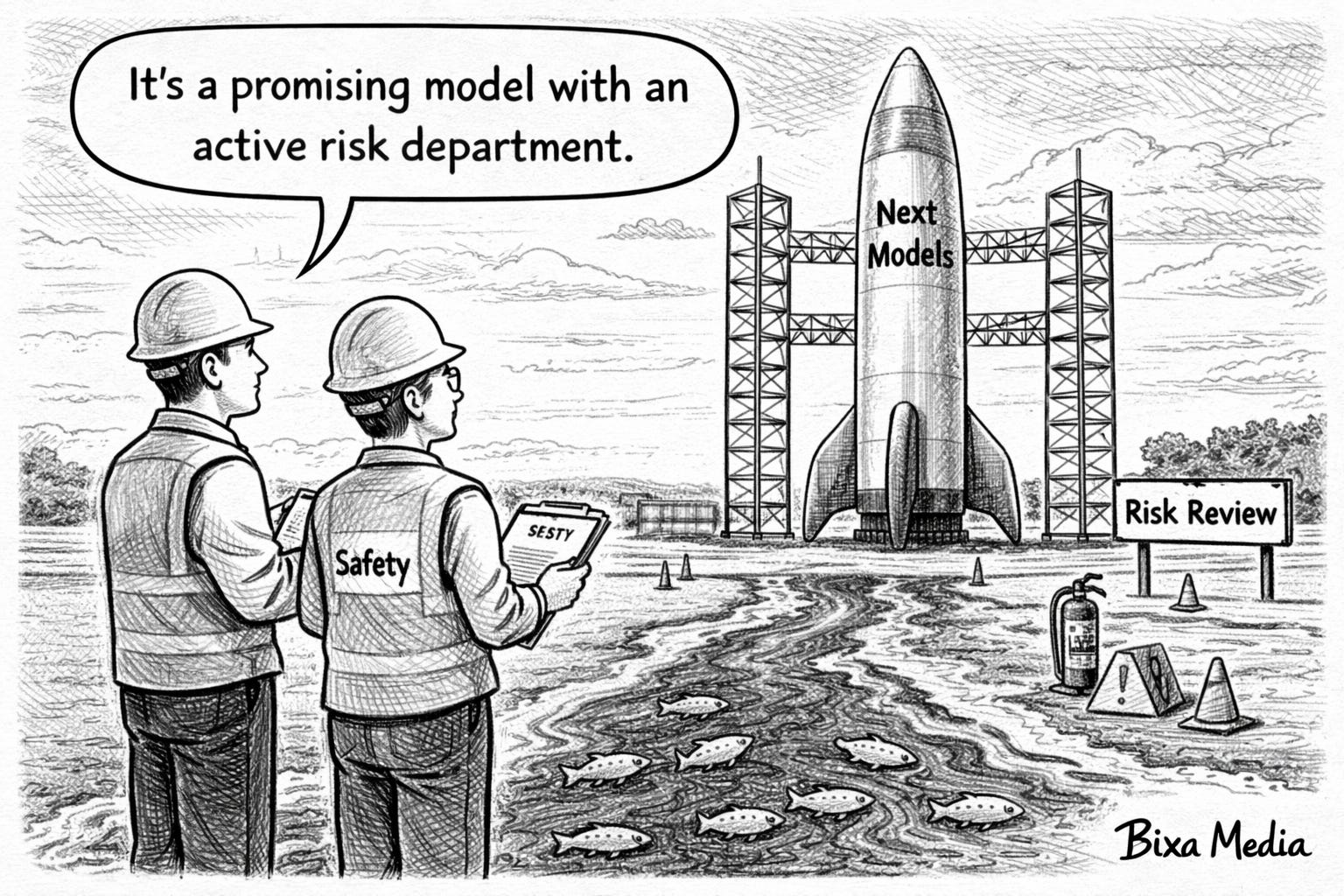
The frontier model race is intensifying. Anthropic accidentally revealed it is testing Claude Mythos, a new model tier above its current flagship Opus line, which the company described as a “step change” and “the most capable we’ve ever built.” The model is currently available only to early access customers, and Anthropic has flagged it internally as posing unprecedented cybersecurity risks.
Google released Gemini 3.1 Flash-Lite, an efficiency-focused model delivering 2.5x faster response times at a fraction of previous costs.
Open-weight models continue narrowing the gap with frontier systems, putting more capable AI within reach of smaller teams.
Why It Matters
Model releases matter to marketers for two reasons.
First, capability improvements flow downstream into the tools you use every day. When the underlying models get better, your CRM automation gets smarter, your ad platform optimizes more effectively, and your content tools produce more usable output. Knowing what is changing at the model layer helps you anticipate what is about to change in your stack.
Second, cheaper inference accelerates the agentic shift covered earlier in this issue. Agents that plan, execute, and iterate across multiple steps consume far more compute than a single chat response. The economics of continuous autonomous operation only work when inference costs drop far enough to sustain it. Every efficiency gain at the model layer makes agent-driven workflows more viable at scale.
The Mythos leak also highlights a new dynamic: the most capable models are now arriving with explicit safety concerns from their own creators. Anthropic is privately briefing government officials about the cybersecurity implications. That tension between capability and caution will increasingly shape how and when new models reach the tools marketers rely on.
What This Means
The gap between what frontier models can do and what is considered safe to deploy is widening. Anthropic is privately briefing government officials about the cybersecurity implications of Mythos. When a company warns that its own model poses unprecedented risks, that tension between capability and caution will increasingly shape how and when new features reach the tools marketers rely on.
Cost is becoming less of a barrier to embedded AI. Gemini 3.1 Flash-Lite at $0.25 per million input tokens makes it viable to run AI on high-volume, low-margin tasks that were previously too expensive. That opens the door for AI to show up in more places across your workflow, not just the high-value use cases that justified premium pricing.
The model layer is fragmenting in useful ways. Not every task needs a frontier model. The emergence of capable, cheap, fast options alongside powerful but expensive ones means teams can match the right model to the right job. That flexibility will matter as AI usage moves from occasional to continuous.
What To Do
Follow model releases for what they signal about where your tools are heading.
When your existing platforms announce AI feature updates, trace them back to the model improvements driving them. That context helps you evaluate whether a new capability is a genuine step forward or a marginal change.
Pay attention to the growing gap between what frontier models can do and what is considered safe to deploy broadly. That gap will affect rollout timelines and the features that reach your tools.
Ignore This If
You are not currently using AI tools in your marketing workflow and have no plans to in the near term.
Sources
Fortune - Anthropic confirms testing Claude Mythos, its most powerful model, after data leak (Mar 26, 2026)
Euronews - What is Anthropic’s Mythos? The leaked AI model that poses ‘unprecedented’ cybersecurity risks (Mar 30, 2026)
Google Blog - Gemini 3.1 Flash-Lite: Our most cost-effective AI model yet (Mar 3, 2026)
The Bottom Line
The pressure right now is to move fast. Adopt agents. Test new ad formats. Shift budget toward AI visibility. And that pressure is justified. The window to build early advantage in these channels is real.
But speed without governance is how you end up with 63,000 exposed instances on the public internet. The teams that will benefit most are the ones treating trust, permissions, and measurement as part of the strategy, not something to figure out later.
What surprised you most in this issue? What are you already acting on, and what still feels premature? I’d love to hear your take in the comments.
If you want more issues like this, subscribe to Marketing Seeds and share this newsletter with a friend, colleague, or team member who wants a clearer view of where AI is creating real change in marketing.