

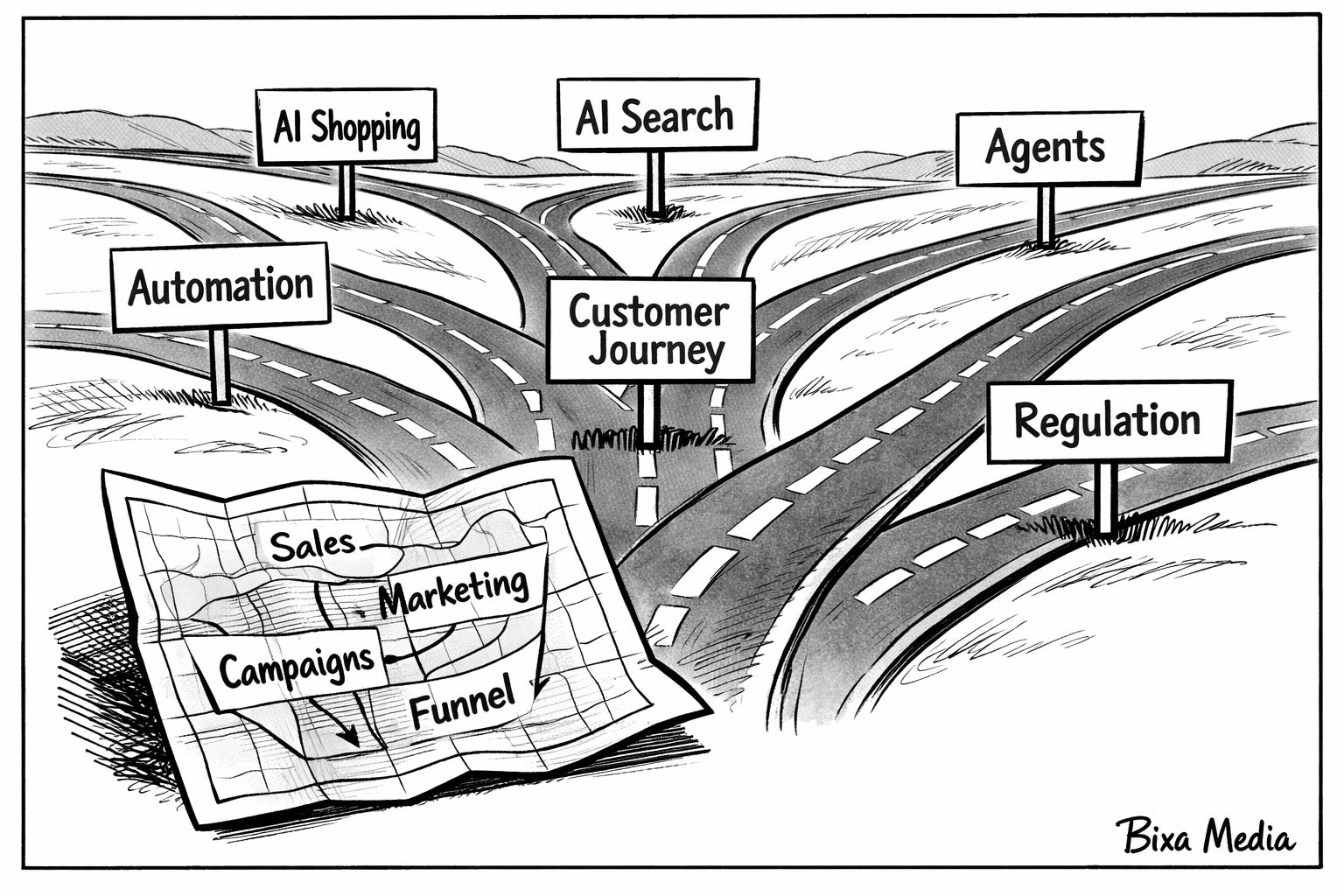
AI is moving out of the sandbox and deeper into the system.
In this issue, the biggest shifts are not just better models. They’re changes in where discovery happens, how work gets done, and what marketers may need to measure differently. New channels are emerging, workflows are getting rebuilt, and the pressure to perform is not letting up.
This issue focuses on what actually changed, what it means for marketers, and where I’d pay attention next.
🔥 High Impact
AI Shopping Is Now an Acquisition Channel
What’s Changed
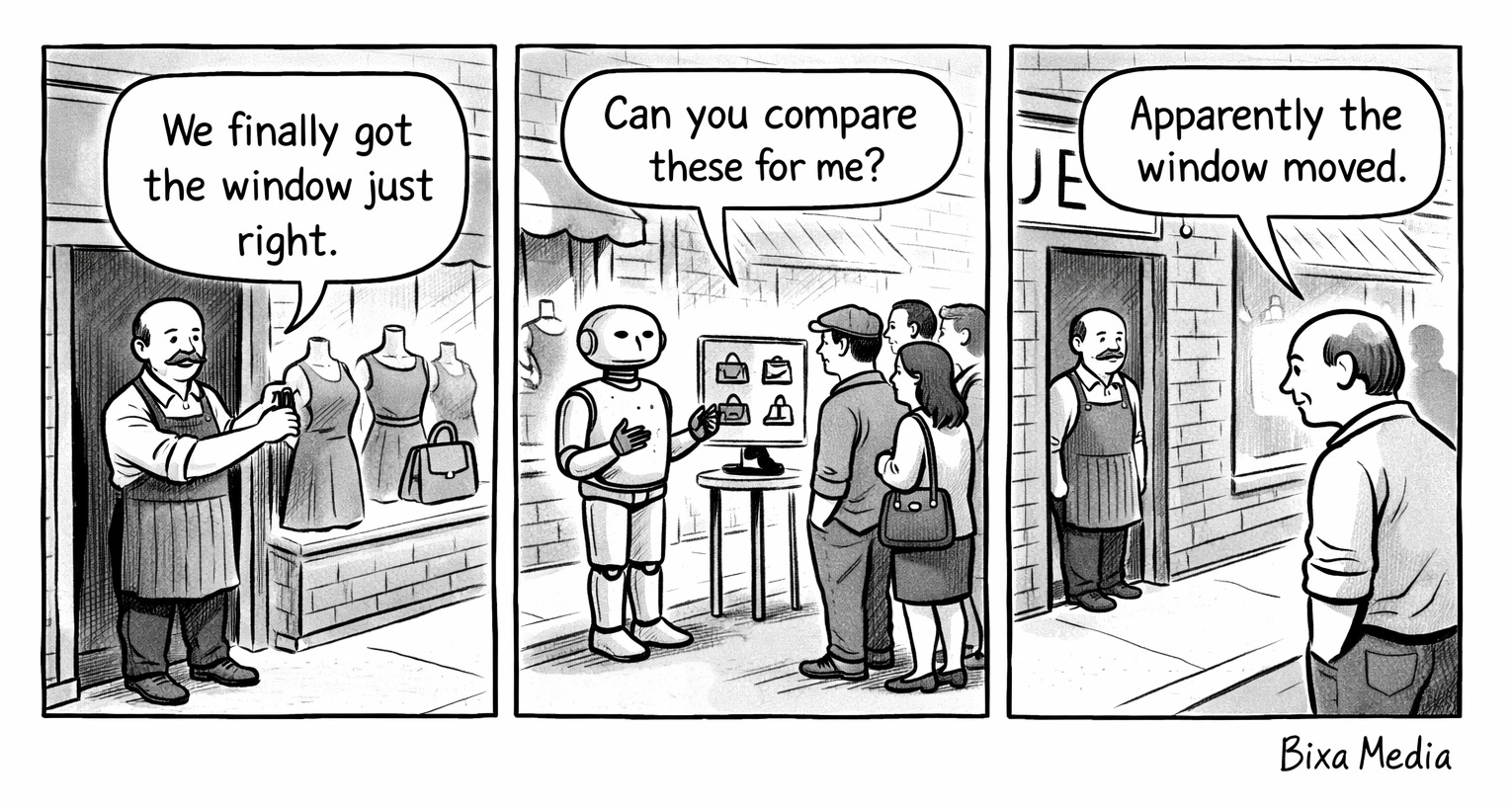
Platforms including OpenAI, Shopify, Amazon, and Walmart are rolling out AI-powered shopping experiences that allow users to discover, compare, and purchase products directly inside AI interfaces.
Why It Matters
The buying journey is compressing.
Instead of moving across multiple steps and sites, users can now go from intent to purchase within a single interaction.
This reduces the number of opportunities brands have to influence decisions through traditional touchpoints.
What This Means
AI is becoming a distribution layer for commerce.
That changes three things:
1. Discovery is shifting further away from owned properties.
Users can discover, evaluate, and purchase products inside AI interfaces without following a traditional browsing flow.
2. Product data becomes your primary marketing surface.
Titles, attributes, reviews, pricing, and availability matter more than page design.
3. There’s a split between discovery and transaction.
AI platforms are positioning themselves to control discovery, while Shopify is positioning itself as the infrastructure layer for transactions.
What To Do
Audit your product catalog for structure, not just copy
Improve titles, attributes, and metadata for machine readability
Treat AI shopping surfaces as an emerging acquisition channel
Prepare for fewer traditional browsing journeys
Ignore This If
You don’t sell products or rely on online transactions.
Sources
Shopify - AI Commerce at Scale (Jan 11, 2026)
Retail Brew - Shopify says AI shopping won’t bypass its checkout (Feb 23, 2026)
CNBC - OpenAI, Shopify, Amazon and others push into AI shopping (Mar 20, 2026)
ChatGPT Gets More Controllable and Practical for Marketing Work
What’s Changed
OpenAI released GPT-5.4, improving real-world task performance, adding steerable “Thinking” that can be adjusted mid-response, expanding context length for larger inputs, and introducing clearer model tiers for balancing cost and quality.
Why It Matters
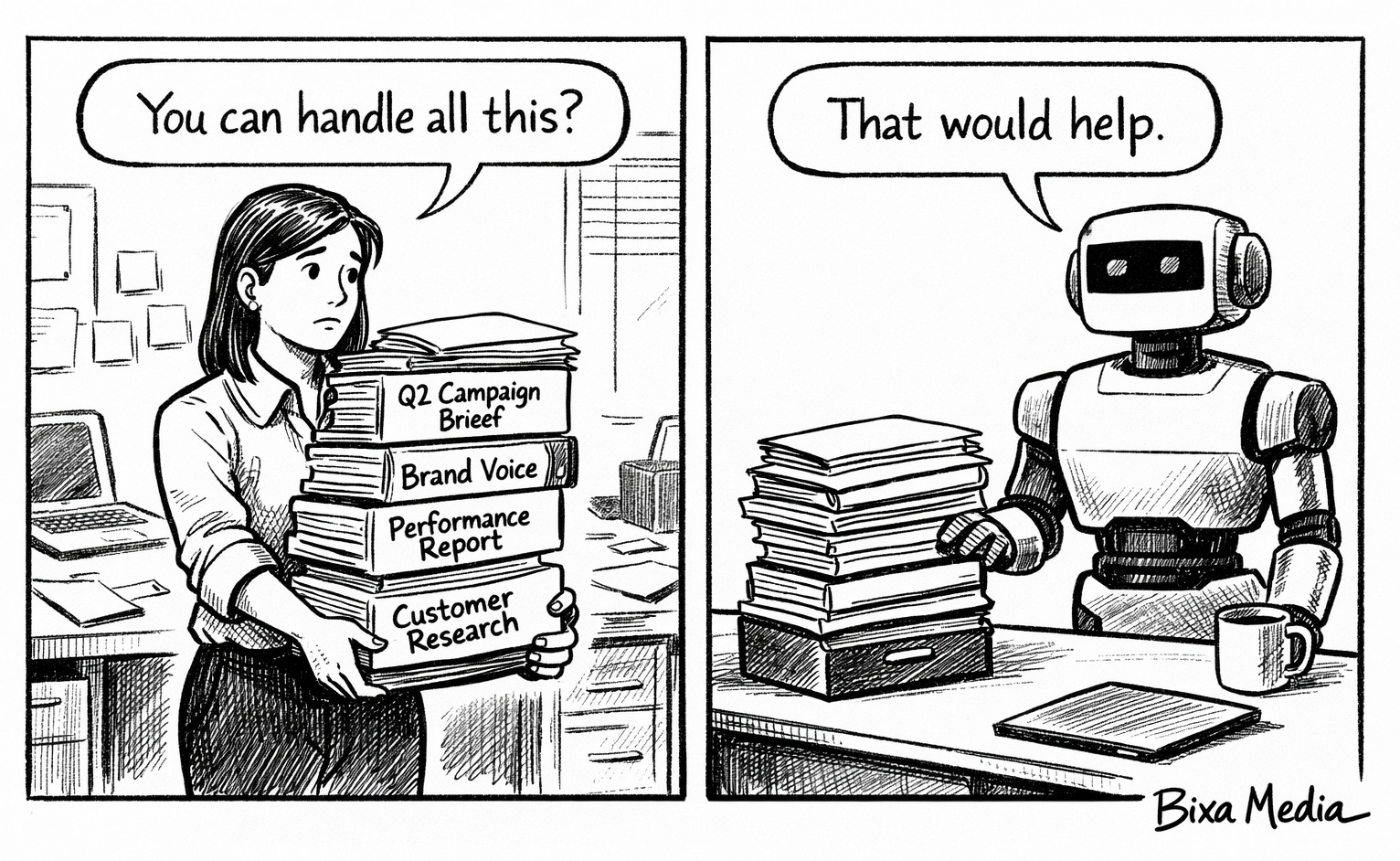
The biggest limitation of AI in marketing hasn’t been capability, it’s been friction in real use.
When outputs are hard to guide, lack context, or require constant restarting, AI stays limited to low-stakes tasks.
GPT-5.4 reduces that friction:
Outputs are easier to refine instead of restart
Larger context allows more complete inputs
Performance is more consistent across real tasks
Cost can be managed across different levels of work
The result isn’t just better outputs, it’s more consistent use, the shift that turns AI from a tool into infrastructure.
What This Means
This makes AI more usable across everyday marketing work, not just isolated tasks:
1. More work can happen inside a single flow.
Research, drafting, and refinement can happen without constantly resetting context.
2. Outputs are closer to usable on the first pass.
Less cleanup, fewer retries, more predictable results.
3. Teams can rely on AI for higher-stakes work.
Not just ideation, but analysis, structured outputs, and repeatable tasks.
4. Usage shifts from occasional to embedded.
AI becomes part of how work gets done, not something used on the side.
What To Do
Start working with larger inputs (full briefs, reports, campaign data)
Treat outputs as iterative, refine instead of restarting
Identify tasks where editing time is the bottleneck and test higher-quality models
Compare cost vs output quality across different types of work
Ignore This If
You’re still using AI for small, isolated tasks instead of end-to-end work.
Sources
OpenAI - Introducing GPT-5.4 (March 5, 2026)
OpenAI - GPT-5.4 Thinking System Card (March 5, 2026)
Mashable - GPT-5.4 arrives on ChatGPT: 5 improvements to know (March 6, 2026)
The Decoder - GPT-5.4 reportedly brings a million-token context window and an extreme reasoning mode (March 5, 2026)
Getting Found and Getting Clicked Are Starting to Split
What’s Changed
Search platforms are expanding AI-native experiences that answer more questions inside the platform itself.
Google continues to push AI Mode and AI-generated responses inside Search, while Microsoft has introduced AI citation reporting in Bing Webmaster Tools so site owners can see when their content is being surfaced in AI answers.
Why It Matters
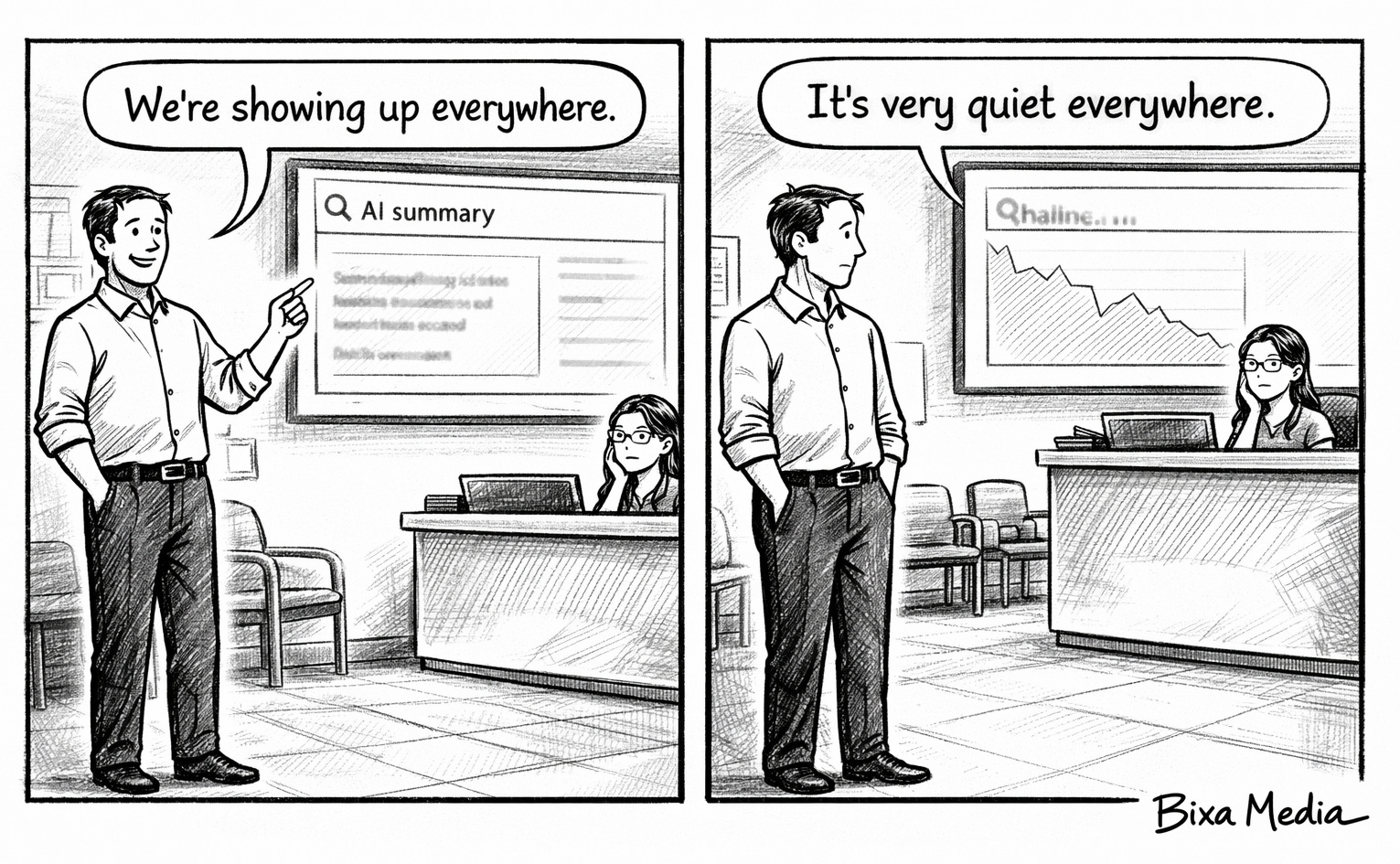
For years, marketers could treat search visibility and website traffic as closely linked. That relationship is getting weaker.
Your content can now influence discovery, appear in AI-generated answers, and be cited by search platforms without driving the same volume of visits back to your site.
Microsoft is telling marketers that being cited by AI is now something to measure, even when it doesn’t lead to a click.
What This Means
1. Search visibility and site traffic need to be measured separately.
Being included in AI answers does not guarantee a visit.
2. Content strategy has to optimize for inclusion, not just ranking.
Content now needs to be clear, structured, and credible enough to be cited or summarized inside AI experiences.
3. Top-of-funnel search traffic may become less dependable.
More informational queries can now be answered without a user ever clicking through.
4. Search value is getting harder to measure with old metrics alone.
Rankings, impressions, and sessions no longer tell the full story when platforms are using your content inside AI-generated answers.
What To Do
Start tracking search visibility beyond clicks, including AI citations where available
Update key pages so they are easier to summarize, quote, and trust
Put more pressure on conversion once visitors do reach your site
Strengthen channels you own, like email and direct audience relationships, and invest in additional discovery channels so search is not carrying the full acquisition burden.
Ignore This If
Organic search is not an important source of discovery or demand for your business.
Sources
Google - AI in Search: Going beyond information to intelligence (May 20, 2025)
Bing Webmaster Blog - Introducing AI Performance in Bing Webmaster Tools Public Preview (February 10, 2026)
Search Engine Land - Bing Webmaster Tools officially adds AI Performance report (February 10, 2026)
Search Engine Land - Organic search is fundamentally disrupted. Here’s what to do about it (March 9, 2026)
If You Want to Track This
I recommend SegMetrics to many of my clients, and they just launched AI Search Tracking, which identifies traffic from platforms like ChatGPT, Claude, Gemini, and Perplexity as its own channel instead of burying it in referrals. More importantly, it ties that traffic to leads, customers, revenue, and LTV, not just visits.
If you’re trying to understand whether AI discovery is actually driving business results, this is worth a look.
Note: If you sign up for Segmetrics through this link, I may earn a commission at no extra cost to you. (Think of it as helping fund the caffeine supply behind this newsletter.)
You can also use coupon code BIXA to get 10% off your plan.
⚠️ Emerging Shifts
The Agent Conversation Is Turning Into Product Rollouts
What’s Changed
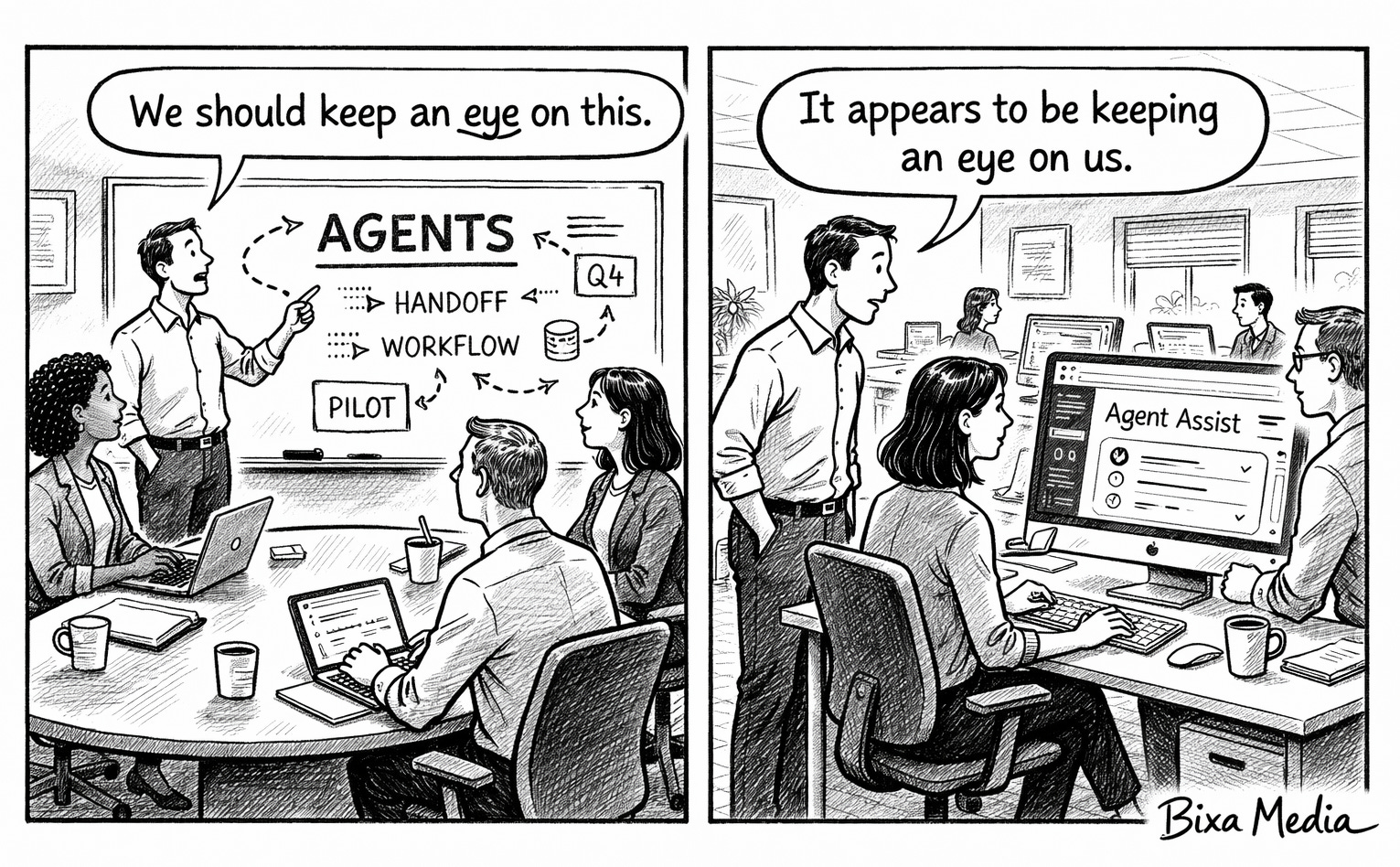
Salesforce launched Agentforce Sales, packaging agentic AI into a product designed for everyday sales workflows like prospecting, account research, follow-up, and pipeline management.
The significance isn’t just the feature set, it’s that a major enterprise platform is turning the agent conversation into a mainstream product rollout.
Why It Matters
Marketers have been hearing about AI agents for a while, but a lot of that conversation has lived in demos, predictions, and vague promises.
Once major platforms start shipping agent features inside real products, the category gets harder to dismiss as hype. The conversation moves from abstract potential to practical implementation, especially in areas tied to pipeline and revenue.
What This Means
1. Agentic AI is getting easier to test in the tools teams already use.
Adoption becomes less dependent on custom builds or early-adopter behavior once these features show up inside mainstream platforms.
2. Pressure will grow to automate more of the revenue workflow.
As platforms position agents as a way to handle research, follow-up, and CRM upkeep, teams will need to decide where automation actually helps and where human involvement still matters.
3. Marketing, sales, and ops workflows may need to be designed together.
If agents start taking on more of the coordination work between lead capture and sales follow-through, the handoffs between teams become even more important.
4. Workflow design will matter more than access.
The differentiator won’t be whether a team has agent features. It will be whether they know how and where to use them well.
What To Do
Watch for agent features inside the platforms you already use
Identify repetitive follow-up, research, and admin tasks that could be good candidates for agent support
Tighten handoff logic and data quality now, before layering in more automation
Treat these rollouts as signals of where broader workflow change is heading
Ignore This If
Your business doesn’t rely on a sales-assisted funnel, CRM workflows, or multi-step lead handoffs.
Sources
Salesforce - Agentforce Sales: Agents Handle The Grind, Sellers Focus on the Win (March 16, 2026)
Futurum Group - AI Agents Take Center Stage: Will Sales Teams That Automate Win in 2026? (February 13, 2026)
Futurum Group - Can Agentforce Sales Redefine AI Sales, Or Will Platform Fatigue Slow Adoption? (March 20, 2026)
The Current Demand for AI Looks More Practical Than Creative
What’s Changed
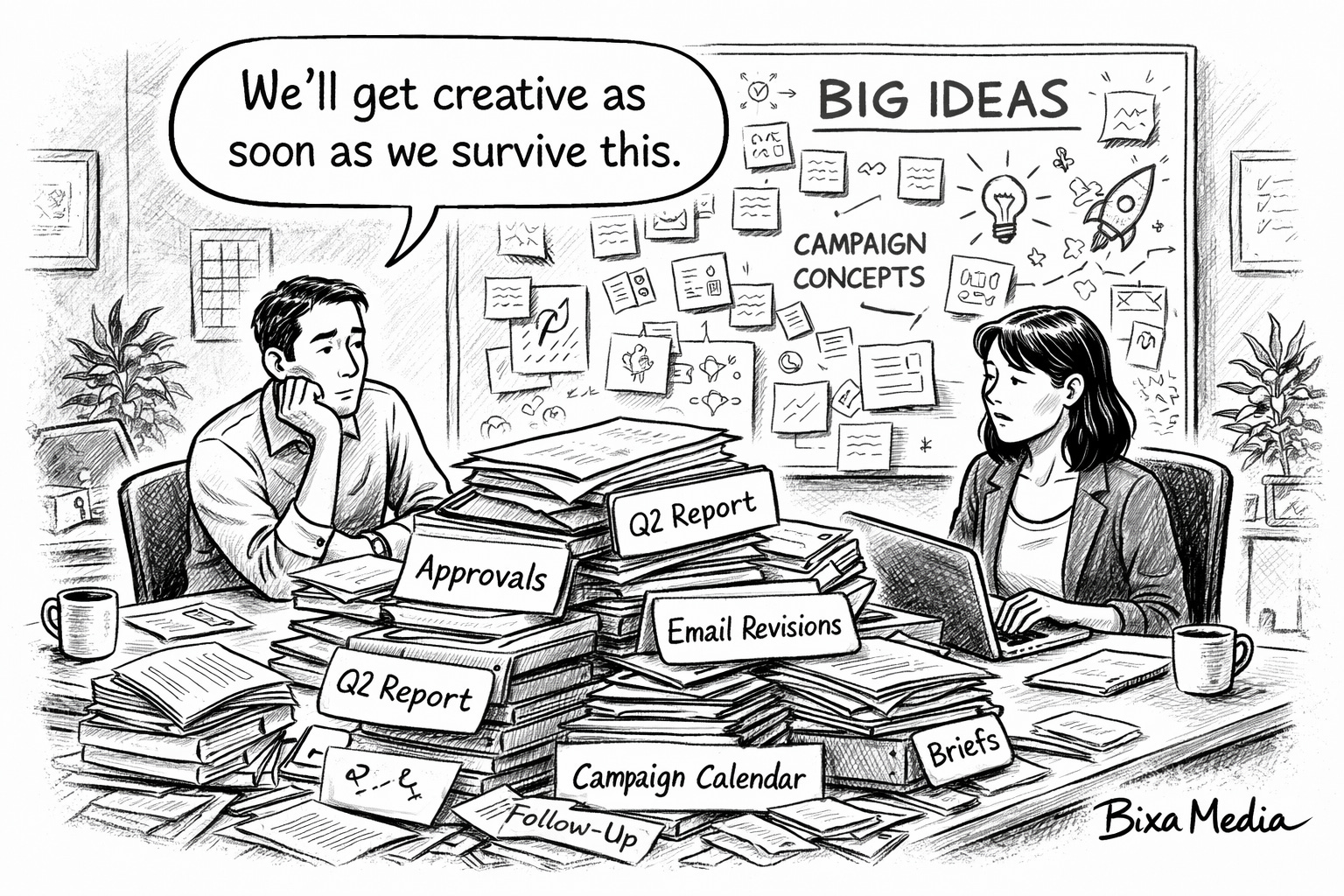
Anthropic published findings from 80,508 Claude user interviews across 159 countries and 70 languages, asking people what they want AI to do for them, what they fear, and whether it has already helped. The strongest patterns were not centered on creative experimentation. They were much more grounded in doing better work, managing life more effectively, reclaiming time, and reducing mental burden.
Why It Matters
1. Free up capacity before pushing creativity.
The best starting point for your team may be using AI to reduce workload around repetitive tasks, coordination, and day-to-day execution. Once that capacity is freed up, it becomes easier to use AI more creatively and strategically.
2. Practical value may be the strongest adoption wedge.
AI use cases tied to clarity, speed, organization, and reduced effort may gain traction faster than ones framed primarily around creativity.
3. This is also a signal about the environment your team is operating in.
If people are turning to AI for help with workload, time, and mental overhead, that points to a broader reality of overload. Your team is not operating in a vacuum, and that should shape how you prioritize AI internally.
What To Do
Start by identifying repetitive, mentally draining work your team wants relief from
Position AI internally as a way to reduce friction and free up capacity, not just generate more output
Use execution-focused wins to build trust before introducing more creative or experimental use cases
Revisit where your team is spending time now, especially in planning, reporting, coordination, and production, and look for places where AI can lighten the load first
Ignore This If
You’re only looking for platform news, not clues about how teams may need to adopt and position AI in practice.
Sources
Anthropic - The Anthropic Economic Futures Program: 81k interviews (Mar 18, 2026)
If You Want Help With This
If this story hit a little too close to home, this is the kind of problem I built AI-Powered Marketing Department to solve.
It helps marketing teams move beyond one-off prompts and start using AI in more practical, repeatable ways, especially when the real need is reducing friction, saving time, and creating more capacity for the work that matters most.
That foundation usually comes before the more creative and advanced use cases.
Learn more about AI-Powered Marketing Department here.
Or start with a free preview here.
👀 Keep An Eye On
AI Regulation Is Starting to Take Shape
What’s Changed
The White House released a national AI legislative framework on March 20, 2026, positioning it as a unified federal approach and continuing its push against a fragmented patchwork of state AI rules. At the same time, state-level AI legislation is still moving, which means marketers may be dealing with both federal direction and uneven state requirements for a while.
Why It Matters
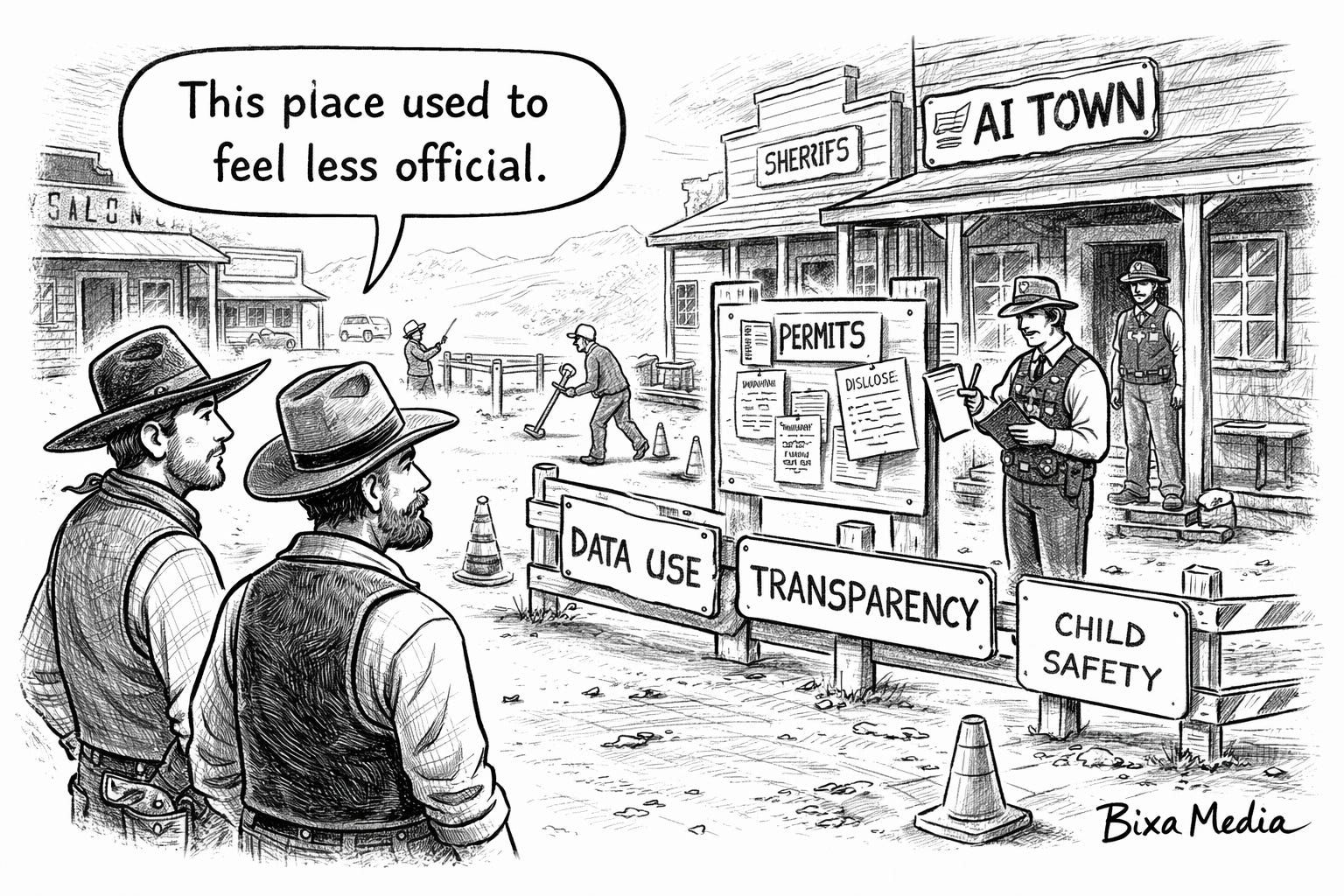
This is less about laws you need to react to today and more about where AI regulation is headed. As policy starts to take shape, marketers should expect more scrutiny around disclosure, data use, consumer protection, child safety, and how AI-generated content is presented. The White House framework specifically calls for privacy-protective age assurance, limits on data collection for model training and targeted advertising when minors are involved, and a more unified national approach.
What This Means
1. The era of loose AI norms will not last forever.
Even if enforcement remains uneven in the short term, expectations around transparency and responsible use are getting more defined.
2. Marketing teams may need cleaner internal rules before the law forces them to.
Disclosure, synthetic content policies, and data-use standards are likely to become more important over time.
3. Regulatory complexity could become a practical operating issue.
A federal framework may reduce some uncertainty eventually, but the path there may still involve overlapping state and national expectations.
What To Do
Review how your team is using AI in customer-facing content
Start documenting internal standards for disclosure, review, and acceptable use
Pay closer attention if you work in regulated, sensitive, or youth-adjacent categories
Treat this as a signal to tighten governance before you are forced to
Ignore This If
Your team has minimal AI usage and very little public-facing marketing activity.
Sources
The White House - National Policy Framework for Artificial Intelligence (March 20, 2026)
The White House - President Donald J. Trump Unveils National AI Legislative Framework (March 20, 2026)
The White House - Ensuring a National Policy Framework for Artificial Intelligence (December 11, 2025)
AI May Start Showing Up in More Customer Interactions
What’s Changed
The current AI infrastructure push is not only about making models bigger. It is also about making AI faster and easier to embed into products, services, and the moments where customers interact with brands.
Why It Matters
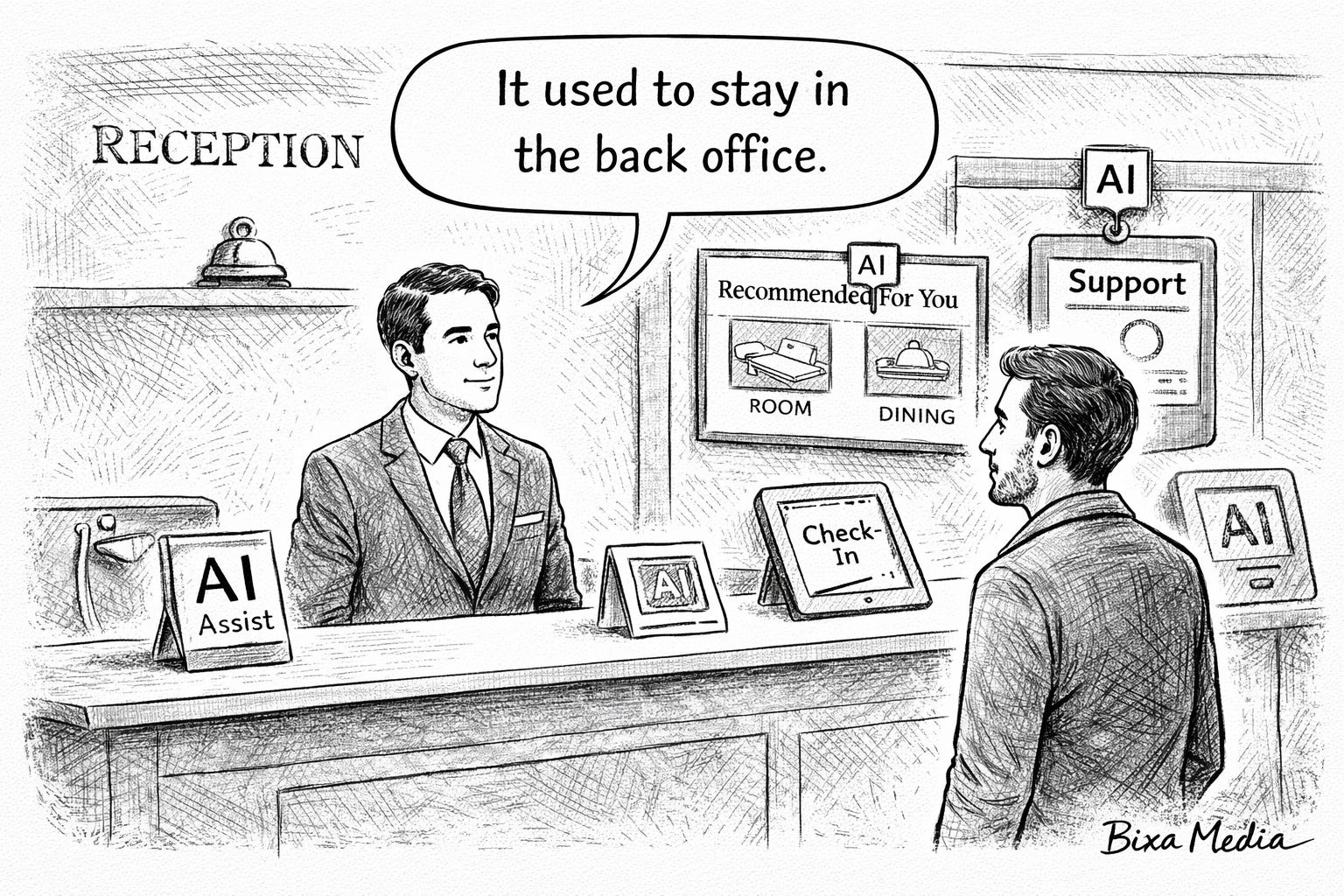
This is not an immediate priority for every marketing team. But it is a signal that AI may increasingly show up in the actual customer experience, not just behind the scenes in planning, writing, reporting, and analysis.
What This Means
1. AI may move closer to the moments customers actually experience.
That could include support, sales conversations, guided buying, onboarding, recommendations, and other interactions where speed and relevance matter.
2. The experience may become part of the advantage.
As AI gets embedded more directly into customer interactions, the differentiator may be less about having AI and more about where and how it shows up.
3. Marketing may need a broader lens.
Over time, marketers may need to think more about how AI shapes the full buyer and customer journey, not just internal workflow efficiency.
What To Do
Watch where your existing platforms are adding AI into customer interactions
Pay attention to moments in the journey where faster, more adaptive experiences could matter
Treat this as an early signal, not an immediate overhaul
Ignore This If
Your team is focused purely on internal execution and has little influence over the buyer or customer experience.
Sources
NVIDIA - NVIDIA Launches Vera CPU, Purpose-Built for Agentic AI (March 16, 2026)
Arm - How on-device AI is accelerating everyday apps (January 5, 2026)
AMD - AMD at CES 2026: AI Everywhere, For Everyone (January 2026)
The Bottom Line
Marketing isn’t getting easier, it’s getting faster.
AI is compressing the path from discovery to purchase, reducing friction inside workflows, and changing how visibility turns into traffic. But none of that lowers the bar. Teams still have to drive performance, protect margin, and make smart bets about where to focus.
The advantage will come from applying AI deliberately in the areas where it can save time, reduce friction, or improve performance.
Which of these developments feels the most actionable for you and/or your team right now? And which one are you still watching from a distance? I’d love to hear your take in the comments.
If you want more issues like this, subscribe to Marketing Seeds and share this newsletter with a friend, colleague, or team member who wants a clearer view of where AI is creating real change in marketing.